

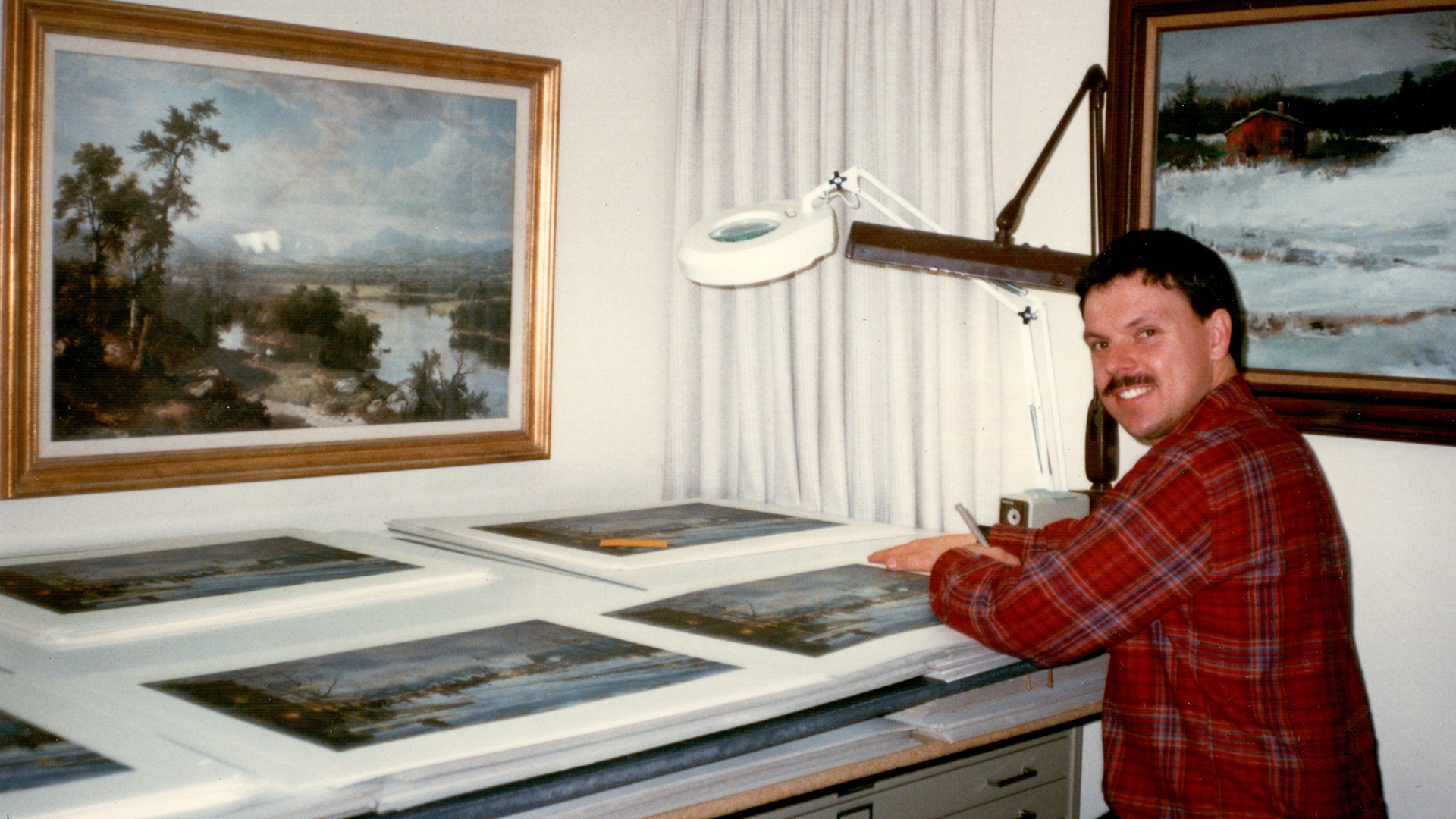
The “Painter of Light,” the espouser of wisdom and the painter of cottages, Thomas Kinkade illuminated the masses with his pastoral paintings and nods to the Lord. Usually, it comes to mind for Charles Schulz or Walt Disney’s works for major paintings broadcasted to the masses, but it’s Kinkade’s work hanging in one in twenty American households. “So much of Kinkade’s product was selling pieces of himself,” which is noted heavily throughout Art for Everybody.
You know, the element of art radiates with humanity, as there is always a sense of color and perception with every piece we come across. And what exactly qualifies as art? In Kinkade’s case, critics claimed his work became “kitsch” creations, which may have been mass-produced to be put up everywhere but are not necessarily dignified representations of masterpieces of visual culture. Director Miranda Yousef gets insightful on Kinkade’s mass appeal and idyllic subjects. Yousef brilliantly gives us a perspective of Kinkade’s multimillion-dollar empire, built in California alongside business partner Ken Raasch. “I want to have my art go into homes in forms that people can love and can treasure, if that means it’s reproducing collector plates, if it’s reading cards, if it’s calendars, I would welcome that.”
However, around the halfway mark, the documentary delves into the harsher reality of Kinkade’s undisclosed side of his career, which subtly piques curiosity about a painter who preached light in his works. Some of his hidden pieces paint a gloomier side, while his earlier life explores a mental state of teeter-tottering. There is also a tidbit of his business getting lawsuits levied against him. The documentary also touches upon how disconnected his paintings would take him from his daughters and wife and how the alcoholism would affect the later parts of his life before his unfortunate death in 2012. It’s meticulously curated and somewhat revealing in this work, and the dimensions revealed give depth and flavor to Yousef’s work.
It’s an astutely balanced film, showcasing an individual’s preach of the light for artistic representation while becoming bogged down by the corporate responsibilities and hardships of a growing empire. Kinkade wanted to paint and share the Lord’s values, whether it was to his ardent defenders or most significant critics. And perhaps, much like the namesake title, there is art indeed for everyone to admire.


