

This post contains spoilers.
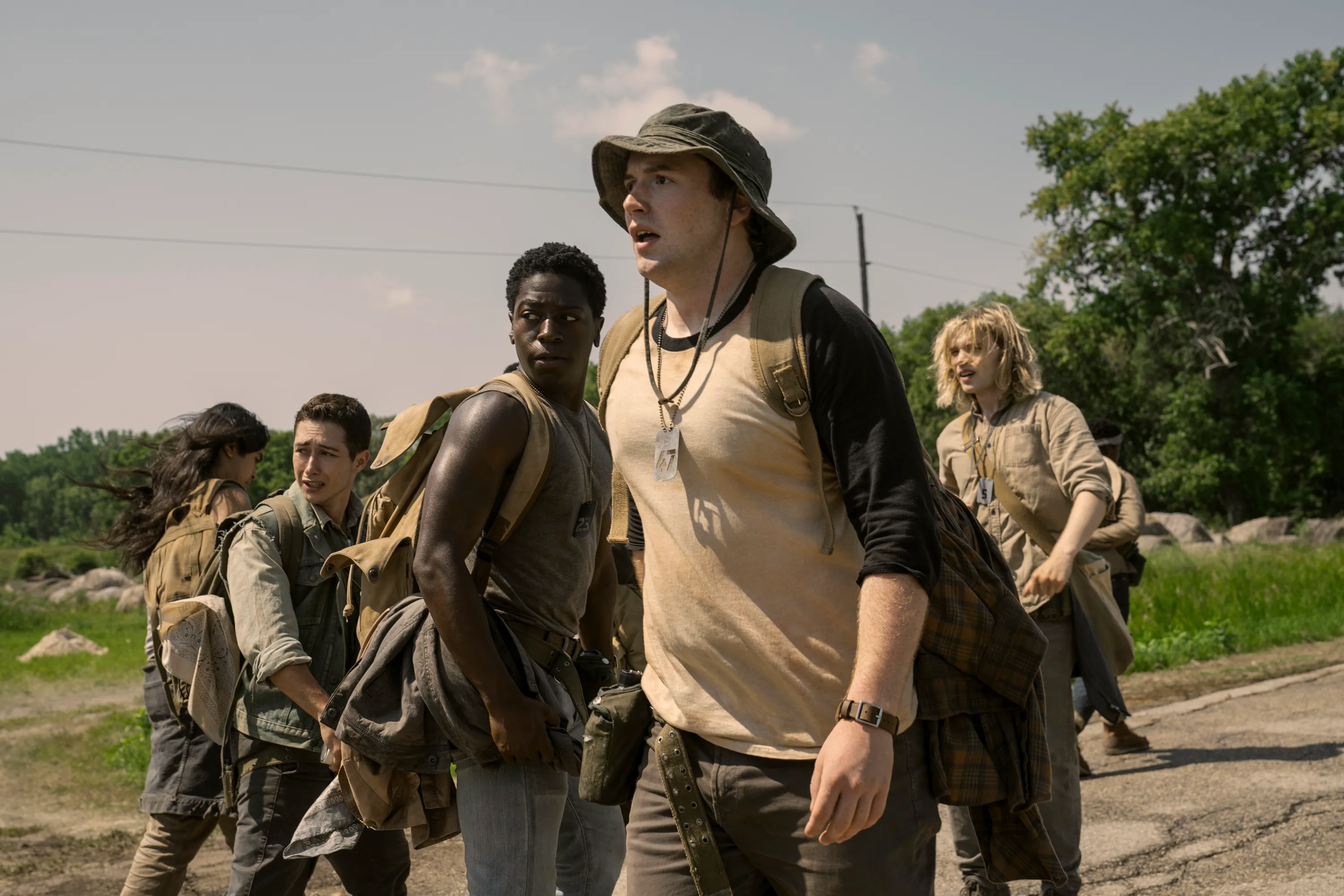
Francis Lawrence develops Stephen King’s The Long Walk into a classic story of perseverance under pressure. Set in a dystopian, economically poor 1970s America, the film follows 50 teenage boys as they participate in the annual Long Walk, a televised contest where they must walk at a steady pace of three miles per hour, nonstop, for hundreds of miles across the country.
The Long Walk is meant to inspire patriotism and work ethic in the millions of Americans watching. That being said, the onlookers of the Walk are depicted in an eerie manner that doesn’t exactly come to fruition. Their repetitive presence almost implies something sinister, but they receive no further development other than being bystanders to the boys’ plight. The boys, one hailing from each state, create friendships and rivalries that grow throughout the story, the main focus being on the connection between Peter “Pete” McVries (David Jonsson) and Raymond “Ray” Garrety (Cooper Hoffman).
When it comes to book-to-movie adaptations, most of the time I haven’t read the book. I approached this film expecting to be told a story from start to finish, and I felt there were missing parts to the overarching narrative. Because it’s never mentioned, I could not tell what year The Long Walk was set in, only discovering it was the 1970s after online research. Additionally, “the War” is alluded to numerous times, without any explanation of what it was about or which nations fought. The characters themselves are also given little explanation of who they are besides Ray; the only glimpses we get into Ray’s life are through flashbacks, while the remaining Walkers provide their backstory verbally. This causes the movie to unfortunately suffer from sameness – most of the scenes are of The Long Walk itself, when it would have been interesting to insert cutaways of Pete, Art, and Hank’s lives for the audience to attach themselves to the characters more emotionally.
I think cinema is a perfect art, although films themselves may be imperfect. Plot holes in The Long Walk didn’t present themselves until after, when I discussed the movie with friends: Art dies and hands his rosary to Ray, telling him to give it to his (Art’s) mother. When Ray dies, he forgets (?) to give Pete the rosary to pass on, nor does Pete ask for or take it from him. This emotional aspect is lost, as it would have been more heart-wrenching if the characters had continued to pass on the rosary.
Peter McVries is covered head-to-toe in plot armor: in the novel, he dies and Ray Garrety eventually wins The Long Walk but in the movie, Ray sacrifices himself, leaving Pete as the ultimate winner. Pete is the only character who doesn’t suffer any serious ailments, which positions him well as the winner, but is odd taking into account the massive physical toll the Walk takes on the body. His killing of The Major without any consequences was illogical: considering the totalitarian regime the country is under and the level of fear in which the Walkers speak about The Major, Pete’s murder of an important figure should have immediately resulted in repercussions but instead, he walks off scot-free and the movie ends. While this can be an ending left to encourage speculation of what happens afterward, it feels a bit empty when The Major had been such a prominent antagonist throughout the story.
As someone who’s both easily and not easily impressed by movies, I enjoyed The Long Walk. The premise of a nonstop, cross-country walk with David Jonsson in a starring role and the vagueness of the film’s society intrigued me. However, that vagueness does reach a point: with movie adaptations, there is a certain amount of background from a novel that must be incorporated so the audience doesn’t feel disjointed from the narrative, like they’re missing information. Besides this slight disjointedness I felt, I believe The Long Walk is worth watching, and is another good entry in the catalog of Stephen King movie adaptations.


