

June Zero, directed by Jake Paltrow, is a compelling exploration of the trial and execution of Adol Eichmann, a central figure in the Holocaust and World War II atrocities. However, Paltrow’s film shifts the focus away from Eichmann himself to examine the impact of his trial on various individuals. The film states that Eichmann was executed on “June the nothing, 1962” because there is no date to commemorate his death, hence the title June Zero. The film, predominantly in Hebrew with English subtitles, is engaging and deeply immersive despite the language barrier. June Zero is widely open to interpretation from those who watch it and I want to provide some insight through my review.
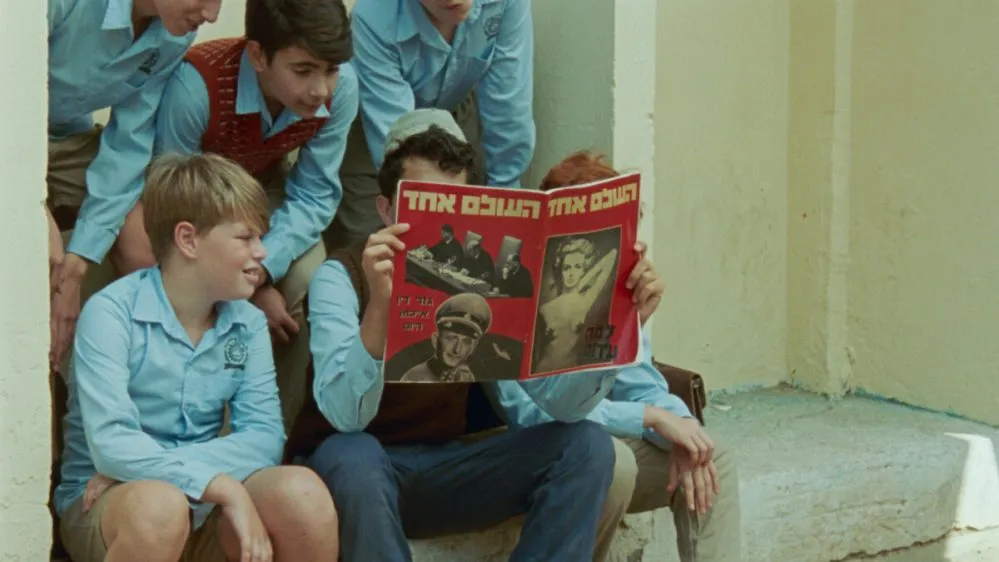
From the outset, Paltrow makes it clear that the film is not primarily about Eichmann. While the trial is a key event, Eichmann’s presence is deliberately obscured. We hear about the trial through classroom discussions and radio broadcasts, but Eichmann is not shown until approximately forty minutes into the film. When he does appear, it is in a deliberately restrained manner—first his feet in the jail cell, then a slow pan upward revealing his body and the back of his head. Paltrow’s choice to withhold a full view of Eichmann’s face, showing only partial glimpses, emphasizes the film’s intention to focus on the broader implications of his trial rather than on Eichmann as an individual. This creative choice highlights the dehumanizing effects of Eichmann’s actions and shows him as a man unworthy of screen time and even makes the audience scared of him. This element is enhanced through Eichmann’s very limited dialogue.
June Zero interweaves three distinct but interconnected storylines, each providing a unique perspective on the aftermath of Eichmann’s trial. The first storyline follows David, a young Arab Jewish boy in Israel. After being caught stealing, David is sent by his father to work in a factory. His task involves helping to build an oven for Eichmann’s cremation following his conviction. The film delves into the ethical dilemma surrounding Eichmann’s execution: whether to replicate the violence he inflicted on countless Jews or to opt for a more humane end.
The second storyline centers on Haim, a Moroccan Jewish prison guard assigned to protect Eichmann from those seeking their own brand of justice. Haim suffers a head injury that exacerbates his paranoia, leading him to suspect that a barber hired to cut Eichmann’s hair might be an assassin. The barber’s cryptic statement, “Eichmann isn’t the one in prison, we are,” foreshadows the psychological trauma and the pervasive sense of entrapment that continues to affect those living in the post-Holocaust world. This storyline illustrates how trauma and fear can distort reality and affect those who are tasked with safeguarding justice.
The final storyline focuses on Micha, a Holocaust survivor who gives lectures in Poland about his experiences in a Nazi concentration camp. Micha faces the dilemma of whether to continue recounting his traumatic past, risking that his story might be overshadowed or misunderstood, or to harness his experiences to educate others and prevent the repetition of history. His struggle highlights the tension between the personal cost of reliving trauma and the imperative to bear witness and educate future generations.
June Zero took a different approach to examining this intense subject matter and I believe in worked in Jake Paltrow’s favor. Overall, June Zero is an aesthetically pleasing film that emphases the colors blue, red and orange and leaves the audience to come to their own conclusions over the subject matter in the film. June Zero should definitely be added to your movie list if you are in the mood to experience an educational and enlighten film that isn’t super emotional.


