

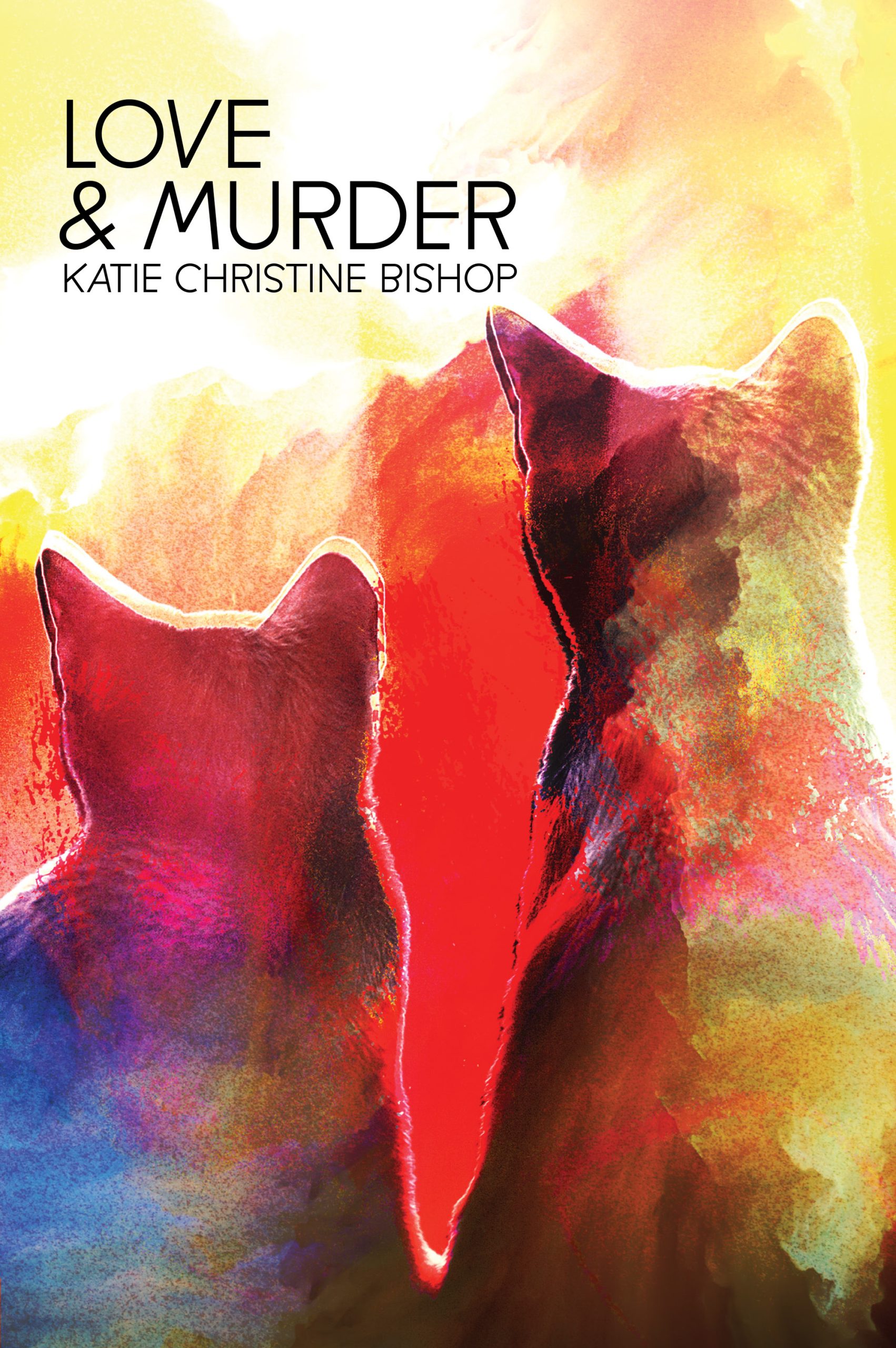
Great stories do more than entertain. They challenge assumptions and give audiences new ways to see the world. Award-winning author Katie Christine Bishop draws inspiration from the wit, dramatic tension and social insight of classic cinema in her book, Love & Murder, a darkly humorous, suspenseful tale that uses the unlikely perspective of two house cats to explore the true nature of humanity amid the collapse of social order.
The bantering sibling cats at the heart of Love & Murder echo the wry, often exasperated dynamic of Nick and Nora Charles in The Thin Man (1934), while the warring factions and social breakdown in Akira Kurosawa’s Ran (1985) find feline counterparts in a world where competing groups struggle for power and control of scarce resources. These cinematic influences help shape a story that balances sharp character interactions with larger questions about society and human behavior.
The idea for Love & Murder began with a chance encounter in France, where Bishop noticed a colony of cats sheltering around a church. How many of these animals, she wondered, had once known a comfortable home and a caring family, only to lose that security in a flash?
That question inspired Love & Murder, in which squabbling sibling house cats — suddenly thrust into the outside world — must navigate gangs, food scarcity, betrayal, environmental upheaval and the struggle for survival.
Bishop’s own childhood gave her an early understanding of how quickly security can change. She grew up comfortably middle-class, did well in school, went to church and played soccer. Then her mother became ill and permanently disabled, and her father lost his job. Years later, that experience of how suddenly circumstances can change helped shape Love & Murder and its exploration of vulnerability and social instability.


