

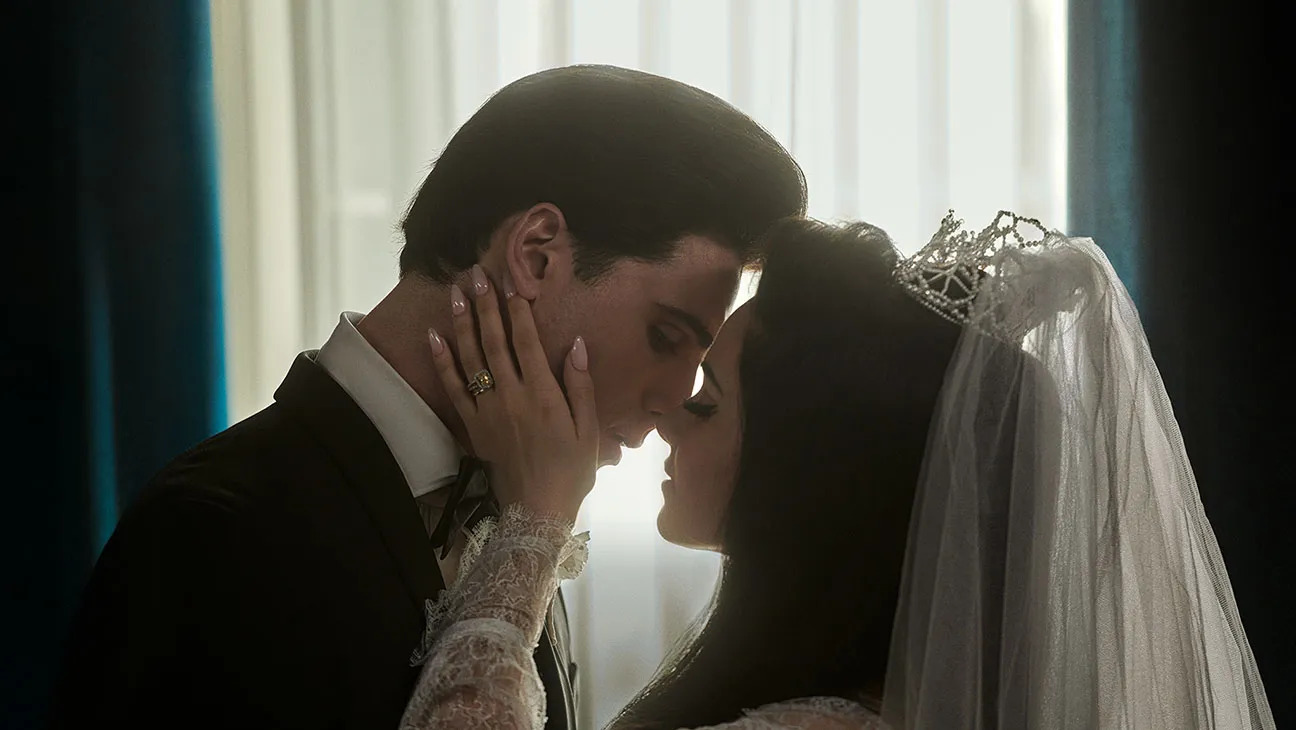
Writer and director Sofia Coppola presents audiences with an unfiltered depiction of Priscilla Presley’s early years, from her first encounter with the King of Rock and Roll to her official departure from Graceland.
Deriving its source material from Presley’s memoir, “Elvis and Me”, Coppola’s soul stirring biopic sheds light on the dubious nature of Elvis’ actions by emphasizing how vulnerably juvenile Priscilla was throughout their relationship. The two met when she was fourteen and he was twenty-four.
Coppola once again masters what she does best; depict the melancholic solitude of a young woman grappling with the afflictions of adolescence. The audience is able to become one with Priscilla by means of intricate mise-en-scène. Coppola’s commitment to aesthetic and design is undeniably one of her many fortes as a filmmaker. Even at times when the narrative might falter, technical components such as costume and production design make up for it.
Cailee Spaeny gives a stellar performance as Priscilla throughout her teen years up until her late 20s. From body language to vocal cadence, Spaeny does an exceptional job at portraying Priscilla’s gradual growth and insistence for autonomy.
To embody Elvis without falling into cliché is far from a cakewalk (as Austin Butler proved in Baz Luhrmann’s “Elvis”), but Jacob Elordi defied these odds. Elordi characterized Elvis so effortlessly and authentically, by adding both his own charm with that of Elvis’. His demeanor and diction were intricately emblematic to that of the King of Rock and Roll’s. Elordi emphasized Elvis’ arrogance and temperament to the extent that I found myself laughing throughout the majority of his dialogue, and thinking, “man, this guy was a major asshole”.
The knowledge that “Priscilla” was shot in a span of 30 days makes it nearly impossible to critique. Although the film was near perfect in every aspect, I’ll admit that I left the theater wanting more. After sitting and reflecting on it, I found the bone to pick; when will a woman be more than her marriage?
Priscilla decided to leave Elvis in 1973, and this is exactly where the film concludes. She leaves Graceland for a final time, with no intent of turning back.
In a 1985 interview with Barbara Walters, Presley opened up about the decision behind the divorce. “I had to take responsibility for myself,” Presley said. She also emphasized that by leaving Elvis, she “found Priscilla”.
Nonetheless, the many pros outweigh the one con I had for this film, which I still can’t fully put my finger on. Perhaps upon rewatching I’ll understand why, or maybe I won’t. Ultimately, this is the beauty of Coppola’s auteurism.
A Letterboxd review by user lib333rty summed up the film remarkably. “Coppola directs and writes like a beautiful sad song – you can listen to it over and over,” she said. “Women carry their anger in purses. They know that there’s not much to be done. They leave the comfort of their decorated bedrooms. They just have to leave.”
All in all, “Priscilla” was a masterpiece in its own right, and possibly one of Coppola’s best to date along with “Lost in Translation” and “The Virgin Suicides”.

