
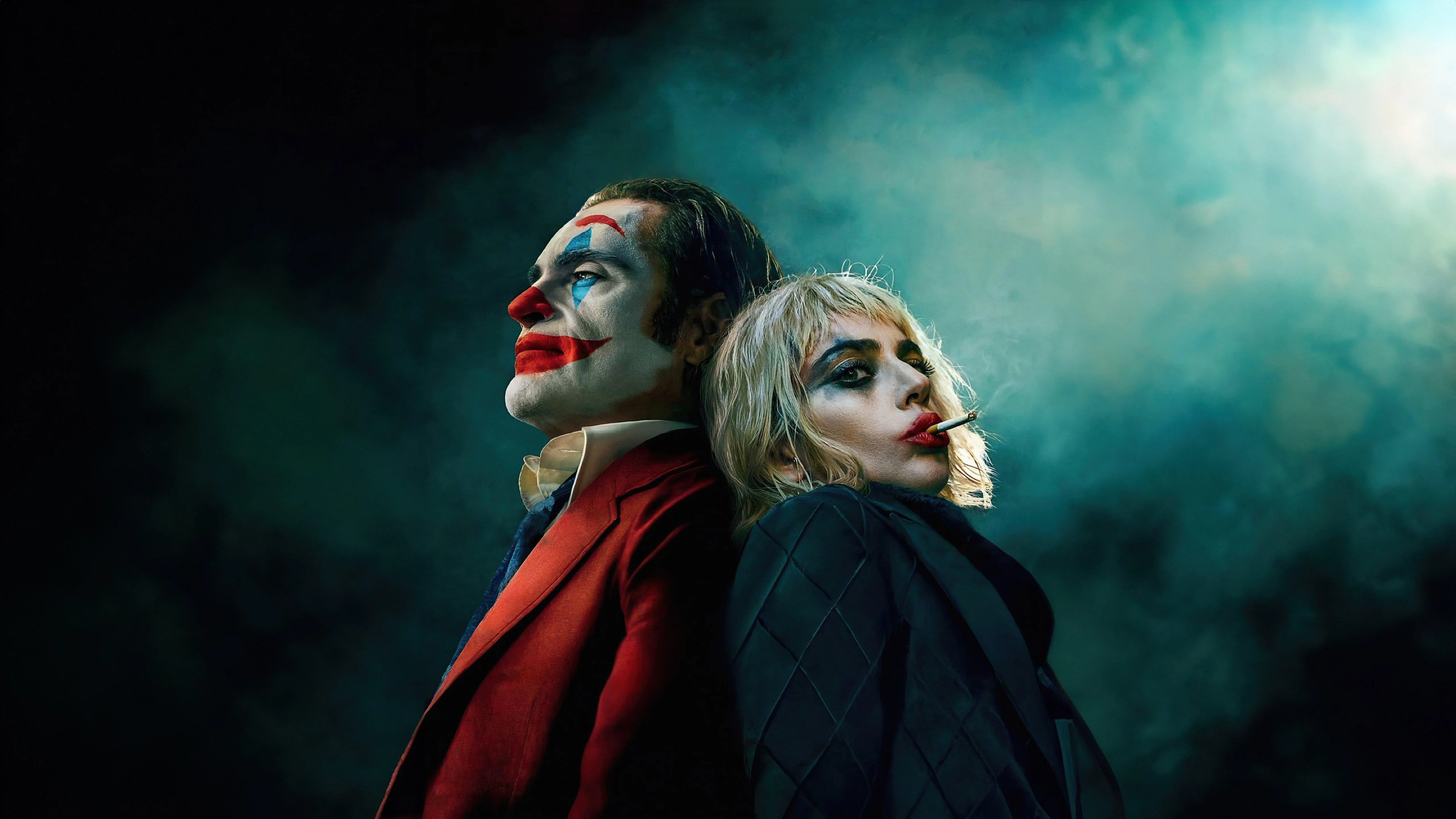
Warner Brothers may have had every intention to rejuvenate their state of affairs with an “optimistic” sequel with the iconic clownster that lit the world on fire in 2019 with $335 million domestically and $1.08 billion worldwide. However, when critics and audiences galore protest in a fit of rage as to “why is Joker now a musical?!?” for its sequel, then you’ve got your priorities, or, um, envisioned returns, perpetually wrong. Perhaps it was an overshot of expectations, which has become (near) synonymous with sequels that have fired into the film stratosphere. Grease 2, Son of the Mask, Zoolander 2, Predator 2, Independence Day: Resurgence, and the most recent The Marvels have fallen from heights their predecessors latched. And Joker: Folie à Deux crumbled with a mere $58.3 million domestically and $206.4 million worldwide.
That’s not even one-fifth of what its predecessor made. What the hell unfolded here? Did Joaquin Phoenix’s dream come true only to shatter the production?
Well, perhaps the most significant elephant in the room is the budget, which already stood at an asinine $190-200 million. Typically, over-budgeting your colossal sequels/IPs is a preposterous idea, and it also hinges on whether audiences will cater to the idea of continuing to enjoy the perks of a “franchise in the works.” First and foremost, there is the catch, as folks were curious the first time. Simply because we appreciated an unhinged, anarchic Kick-Ass doesn’t mean we wanted a sequel (even discounting Jim Carrey’s condemnation of the violence aspect). And you can’t expect The Suicide Squad to pull great numbers when Will Smith is not leading the pack (with the notation of COVID variables and PVOD options in the mix). You can succeed when your budget is kept in check (think Secret Life of Pets 2), but not when it is blown out of proportions that seem too much of a danger. Currently, Gladiator II is in a pickle because the Ridley Scott-led work needs to pull miraculous legs and stem well overseas to justify its higher budget of closer to $300 million.
Another aspect is that originals sometimes overperform, which makes it impossible for a sequel to catch up for another time. Black Panther skyrocketed to an insane $700 million domestically and $1.35 billion worldwide in the spring/early summer of 2018, which indirectly helped and hurt Avengers: Infinity War (helped because the events tie into the MCU storytelling, but hurt because of potential domestic legs where the big team-up blockbuster couldn’t surpass the Chadwick Boseman-led feature legs). Despite noting the heart-breaking loss of Boseman and the lack of China and Russia, its sequel could only reach $859 million worldwide (which still qualifies as a win for the MCU sequel).

Joker: Folie à Deux took both elements home and couldn’t break the mold this time. Nobody asked for another Joker film or the leading clown to settle into a macabre musical drama that spent a solid batch of time in a courtroom or behind a jail cell. Lady Gaga barely clawed much with her variable involvement, and poor reviews sealed its fate (along with a D from CinemaScore, the lowest grade ever for a comic book film). Technically, there was a subtle reminder that the predecessor opened as the “spectacle event” that allowed it to flourish at a time before COVID took over (right in the crosshairs of the Academy Awards and in time for the spooky season to take off), while the sequel opened because it was advertised as a chaotic musical.
The even more excruciating matter is that this sequel is the sixth bust of some fashion after the dying ashes of DC. Black Adam, Shazam 2, The Flash, Blue Beetle, and Aquaman 2 collapsed in the face of trying to resurge DC, and Warner Brothers lost all the gold. One could argue that Aquaman 2 didn’t black out like the others ($434.4 million is merely “ok” for a follow-up), but it’s in the same boat as Joker 2 here: it overperformed in its first chapter due to pomp and circumstance, and the zest was lost for the second time around.
Joker: Folie à Deux had a two-sided coin to land on: a more appealing feature that could be justified on a heavy budget or a cheaper film that can be remedied, even if the word-of-mouth became worse than expected. It couldn’t land on either, and it’ll be a stark reminder that Hollywood will continue to press an IP-heavy hand to claim “it’s for the fans” mentality.
James Gunn, you best know what you’re planning for your DC reboot and next year’s Superman, or it’ll be another Warner Brothers’ gravestone to start digging.


