

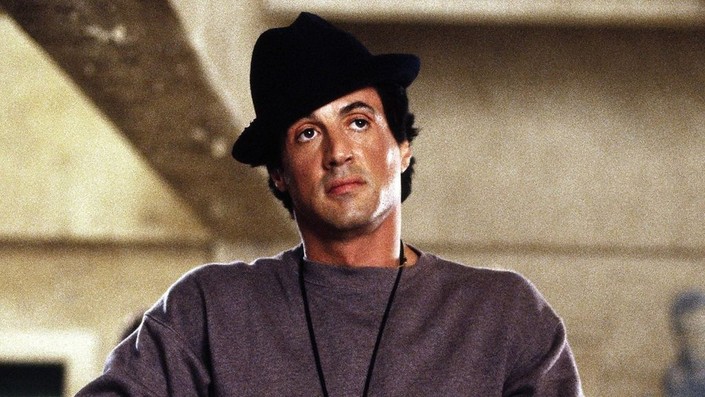
Greetings, folks!
Welcome to a new series titled “Re-Writing and Reviving Films,” in which we analyze and take a different approach to examining how select films could have been rewritten to become more valuable in the vast array of film collections rather than ending up like tchotchkes. This could include any film originals, sequels, remakes, animated works, etc. The objective is to have one or two of these monthly discussions, acknowledging that making a good movie takes as much effort as it does for a bad one. And today, to kick off the discussion, let’s journey back to 1990 and discuss the notorious “rock bottom” film for the iconic boxing drama in the Rocky series, Rocky V.
So, without further ado, let’s start with the first one of this collection. (NOTE: Spoilers are abundant in this discussion, so read at your own risk!)
Plot:
The fifth installment was released on November 16, 1990, to negative reviews and only grossed $120 million worldwide on a $40 million budget. The plot follows Rocky (Sylvester Stallone) experiencing mental disabilities after his victory over Ivan Drago in the unsanctioned match in Russia in Rocky IV, and when returning home, he, unfortunately, ends up bankrupt while also being diagnosed with cavum septum pellucidum that forces him into retirement. Despite remaining dismissive of the goading of anxious boxing promoter George Washington Duke (Richard Gant) to continue boxing, Rocky stumbles upon young protege Tommy Gunn (Tommy Morrison) and manages to coach him to fame with awry results that affect his family and future.

What Unfolded Execution-Wise:
On paper, this film has much potential sprawled all over it; a new concept attached after the series got a little silly with all the methodical montages, training, and ultimate boxing matches. You have a boxing icon who defeated a machine of a man who took his mentor’s life in the previous installment and is now crumbling to “rock bottom” after a cornucopia of issues has struck his physical and mental lifestyles. Now, it begs the question: what is Rocky’s purpose? What can he do now if he cannot fight anymore, if he cannot carry the weight of the family any further? Where does he journey from here, and where does it lead him?
Instead of some optimistic storytelling choices, we get a very languid and uninspiring tread of a film that haphazardly shifts from Rocky’s once apathy to now enthusiasm to train Tommy. Then, all that becomes moot by the second half as Tommy is enraptured by Duke’s promise of luxuries and fame. It is not precisely a swell path to persist on when it abruptly shifts to wanting to train an up-and-comer, only for it to be flushed down the toilet 35 minutes later. As an added footnote, Morrison’s performance is also rather bland, devoid of charisma and substance (the guy literally shows up thirty-something minutes into the film!).
Regarding subplots, Rocky’s son Robert falls out with his father as he gets bullied and joins the wrong crowd of kids at school until they finally make amends. Adrian (Talia Shire) hovers like a monotonous dark cloud over Rocky to ensure he’s not tempted into boxing any further, and Paulie (Burt Young) meanders along. Genuinely, the only thing new, and dare we say subversive, is the re-inclusion of Mickey Goldmill (Burgess Meredith) via flashbacks. However, that becomes gratuitous enough to have one realize the production crew is padding the runtime by relying on nostalgia to carry the tale forward.
It all adds to a cloying and ridiculous drama that doesn’t thrive well and sticks out more like a sore thumb each time upon re-watches. The film starts with the aftermath effects and toppling of the boxing icon, has him train a newcomer, loses that newcomer to a greedy marketing man, has his clash and resolve the family issues, and then fights the newcomer in the streets for a feel-good moment—the end. It’s not a very scintillating tale spelled out.
Reportedly, Rocky was planned to die at the end of the film, which was requested to be altered before filming the final fight, but that would’ve ended the series on such a sour note.

What Could’ve Been:
This section entails some powerful ideas that could have been supplemented to add tension and further weight to the storytelling.
The first twenty minutes could’ve remained intact. But, affixing a better medical diagnosis of why Rocky is experiencing such damage to his physical body would’ve been a bit more manageable to comprehend.
One idea is for Rocky to commit to a boxing fight that will cap off the film, seeing him square off with Tommy in a battle of “protege vs. mentor.” However, because of the injuries of his narrow victory in the street fight over Tommy, he collapses on his way to the ring or in the ring once the bell rings for the title. He’s thus diagnosed with further issues (cardiovascular-related, further brain trauma, etc.) and cannot fight ever again. Tommy, through his reckless thoughts and from being coerced earlier, realizes the damage he caused and makes amends with Rocky. The film can end with Rocky watching Tommy defend his title on the sidelines and raising his hand once the credits roll. Now, you have a continued arc that gives more sentiment to Rocky’s diagnosis established at the beginning of the film while adding pathos to Tommy’s character, allowing us to sympathize with a young guy wanting to get to the top and realize the errors of his ways.
Furthermore, let’s say Rocky agrees to a boxing fight; now, conflict can explode in his family. Maybe Adrian, Paulie, and Robert leave him in the second or third act, so Rocky is alone and has no family or peers to back him as he did in the past four films. Rocky is now grieving, unstable, and potentially broken as a man. Now, tension has been added to the feature. If Rocky collapses (as mentioned in the paragraph above) and is taken to the hospital, he can make amends for being obstinate about his fighting ways.
Another intriguing idea is to make the fight as personal as possible; let’s say Tommy bullies Robert in the street, intending to inveigle Rocky to fight him. This, in turn, kickstarts the street fight that Rocky wins. Afterward, Rocky slams Duke into the car (much like he did in the executed version) and demands a boxing match in a wrathful bit of anger, with Tommy wanting revenge. Now you have tension and something “personal” converging into the third act.
Here are some other ideas that could’ve been tacked on in the narrative,
-Maybe Paulie didn’t cause Rocky to go bankrupt; it was Duke convincing Paulie to sign a power of attorney over to a real estate business person to drain Rocky’s reserves so Rocky would have no choice but to return to the ring to build them back up (despite his injuries). Duke masterminded the ploy of getting Rocky bankrupt and coaxing Tommy to ride alongside him so that tensions would ensue once both fighters were together.
-Robert starts a good friendship with Tommy, and they learn about each other’s purposes. Both want to learn fighting from Rocky, but one gets favored over the other, spurring jealousy and umbrage. (While this idea is glimpsed upon in the film, it could’ve been explored further with such vigor.)
-Adrian threatens to divorce Rocky for his ways, adding depth to their marriage. Maybe Adrian gets struck by Tommy, and that causes her to change her mind about Rocky fighting again.
-A montage is shown at the film’s very beginning, showing Tommy watching and being inspired by Rocky’s hard-fought fight with Drago; now, he tells his family that he wants to find Rocky to train him and win the title, establishing his desire. As we uncover later, he needs to learn heart and compassion.
Closing Thoughts:
As it stands, we can praise the crew for trying to shake up the monotony of the series with a watered-down version of Rocky, who needs to find a different journey due to his financial losses and damaged body. However, the approach required much more tension and personal dealings to make it radiate than a hollow and predictable fifth chapter. Perhaps there is a reason why Stallone rated this a 0/10 in the interview with Jonathan Ross many years ago, as Rocky V is the worst of the series and a definitive low point of his career.
And while it isn’t the worst film out there, it could’ve been so much more. Rocky V gets a D+.
See you next time for No. 2 in the series.


