
Happy 2025! With 2024 in the record books, let’s glimpse what worked (and did not) in the analysis of the past year’s box office.
The total domestic box office reached a little over $8.75 billion, a slight decrease from 2023 and a little over 20% down from 2019’s record-breaking numbers.
Most of the success stories this year were sequels, but as with our extensive research below, we aim to comprehend all the best and worst that 2024 had to offer. So, let’s dive headfirst into the big news:

Big Winner: Disney Returns to Form Thanks to IP
Huh, maybe Avengers: Endgame‘s five-year span did spell how long it would take for Disney to return to form as the leading pack at the box office. With only four noteworthy releases this year, Disney stamped their marks thanks to intellectual property (IP) and rose to the occasion on each one.
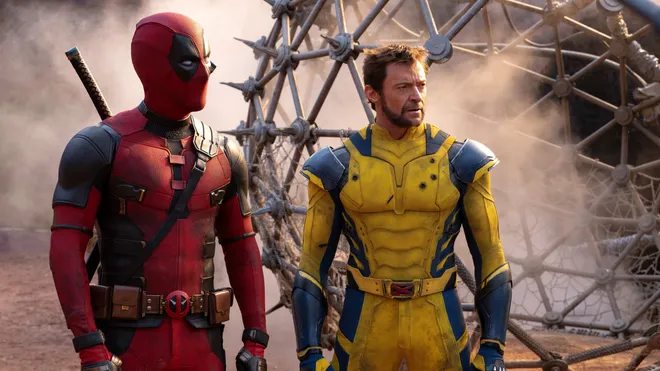
Inside Out 2 roared as the biggest-earning animated film ever and the fastest toon to reach $1 billion worldwide. Deadpool & Wolverine skyrocketed with nostalgia and bloodthirsty aspirations to break records for the MCU. Moana 2, which was at one instance on the brink of heading to Disney+, scored robust numbers for a sequel and is on pace for $1 billion. And Mufasa: The Lion King (which we’ll discuss later) is on course for $600-650 million globally. Disney is the first studio to surpass $5 billion worldwide since 2019, and it will exceed $5.5 billion once Moana 2 joins the record books.
Disney recognized the opportunity in 2024 by playing the “less is more” beats and serving plates of fun and entertainment. Now, the hope is that they can repeat the success in 2025.

Big Loser: Holy S***, Sony’s Spider-Man Universe Crumbled Without the Webslinger’s Involvement!
Oh boy. There is not enough soap to wash the dreaded taste out of this writer’s mouth after witnessing three releases from Sony’s Spider-Man Universe all bust in one calendar year. It almost was a signal of remorse for what Disney pulled back in the past four years since COVID.
And there’s no nice way to put it: Madame Web, Kraven the Hunter, and Venom: The Last Dance are chaotic, morbid products that should’ve never been released, period. True, Venom 3 could coast along fine thanks to Tom Hardy’s invested character work with the black goo symbiote since 2018, but even then, all three brought abhorrent stenches to Sony’s deluded mindset that it could ever succeed as an alternative to Disney’s reigning supreme of IP. Oh, and without Spider-Man.
Madame Web is a stilted piece of soulless garbage that makes Morbius look like a coveted relic. Kraven the Hunter limps along with shoddy CGI and clunky story beats. Venom: The Last Dance may get mileage from its bantering duo, but jarring pacing and erratic tones hurt its overall nature, and some are relieved it’s over. You cannot build a sub-franchise of an IP when the IP is the only variable of interest it can offer. If Tom Hardy’s Venom films are the only saving grace of this castoff universe, it won’t be satisfactory for the rest. And when two of them debut to record low numbers while bombing outright, it’s a signal that enough is enough. It’s time to banish the Sony Spidey universe altogether.
Concomitantly, it raises another question: How can Sony deliver masterful animation with its web-slinger (in the past six years) and a trilogy of ebullient bangers with Tom Holland (alongside Disney’s oversight) but stumble this horrendously for a backdoor universe?

Winner: The MCU Regained (Some) Footing, Thanks to Deadpool & Wolverine’s Nostalgia
2023 was a signal that the MCU might have shot itself in the foot when you had Ant-Man and the Wasp: Quantumania deplorably dismantle the very core of its tiny hero, and The Marvels become the worst box office bomb for superheroes in years. 2024 rectifies that for the most part by playing to its strengths with the fourth-wall-breaking Deadpool and a dosage of nostalgia thanks to Hugh Jackman’s return as Wolverine.
The R-rated threequel is more of a buddy comedy romp that makes self-deprecating moments in today’s (superhero-fatigued) time while honoring the regards of a bygone era of superheroes. It works because it successfully retains a core IP without diminishing its value whilst being a fun Easter Egg extravaganza and jollifying ride. And the multiverse value, something that is drawing weighty scorn in the post-Endgame world, surprisingly is what has led to this follow-up, Doctor Strange in the Multiverse of Madness and Spider-Man: No Way Home to become the top-grossing MCU movies since Endgame.
The other factor was Fox’s death, which became Disney’s gain, as both characters were owned by the former for several years before being capitalized under the Mouse House. Technically, a team-up wouldn’t have required Disney’s involvement had Fox still lurked around today. But business is business, and one’s failed opportunity becomes another’s gold mine. Yes, the MCU no longer contains that specialty attraction pill for folks to show up because it’s a Marvel film, as emphasized by Eternals, Black Widow, Ant-Man 3, and The Marvels (COVID and SAG-AFTRA variables notwithstanding). But for its select sub-IPs like Black Panther, Guardians of the Galaxy, and now Deadpool, those can safely proceed onward to award their respective fanbases.
Deadpool & Wolverine broke a litany of records, including but not limited to:
-Highest-grossing opening weekend for an R-rated film ($211.4 million domestically, $444.6 million worldwide)
-Highest opening weekend for 2024, a July release (beating 2019’s The Lion King), and a summer release (edging out Jurassic World)
-Highest-earning R-rated film domestically ($636.7 million) and worldwide ($1.338 billion)
-2nd Highest-earning film of 2024 (behind Inside Out 2)
-Highest-earning R-rated film under Disney’s banner, surpassing Pretty Woman in 1990
-55th film to pass $1 billion and 11th under the MCU banner to do so
-2nd R-rated film to pass $1 billion behind Joker
-Marvel Studios passed the $31 billion mark from its distribution
-Led the box office on its 3rd weekend, followed by Blake Lively’s It Ends With Us, indicating a married couple held the number one and two spots for the first time since 1990
-And the most viewed trailer of all time, beating out Spider-Man: No Way Home
Now, 2025 will paint a picture of whether the studio can hold firm by going on another release spree with Captain America: Brave New World, Thunderbolts*, and The Fantastic Four: The First Steps. The ball is in your court yet again, Kevin Feige.

Big Loser: Joker: Folie á Deux Lost All the Battles of Budget, Expectations, and Need
Yours truly has already addressed the woes and reasoning behind why Joker: Folie á Deux is the worst conundrum to unfold in the 2024 box office year (see the link attached).
Joker 2 had no paramount reason for existing other than Warner Brothers wanting to roll the dice to see if they could pull a 2nd version of the unthinkable when its predecessor broke past $1 billion worldwide. The self-sabotaging tentpole does the contrary towards much of what its predecessor aspired towards and constantly reminds us of the dangers of containment for your protagonist (a la Glass back in 2019), relieving us of much of the tension and foreboding atmosphere when your leading clown man becomes an atrocious caricature of himself. The musical element becomes opprobriously saturated throughout that it was more mind-numbing to experience than to follow along, and several essential moments of the story are another case of “this is my fantasy, so leave me alone to laugh away, damn it!”.
In addition to this repugnant discussion of where the film aspires to its goods rather than ever considering itself for audiences’ enjoyment, too many variables made it impossible for it even to contemplate succeeding as a sequel:
1) The budget was deucedly high ($200 million, a $130 million jump from its predecessor).
2) The predecessor overperformed that this episode had no shot of coming close. Think Ted 2, Black Panther 2, Kick-Ass 2, The LEGO Movie 2, The Marvels, and Aquaman and the Lost Kingdom.
3) Terrible reviews equate to audiences’ interest dissipating. A D from CinemaScore asseverates this temperament.
4) The fallout from the crumbling of the DCEU continued as Joker 2 became WB’s sixth bust in a row from a commercial and financial perspective, another reminder that superhero fatigue had permeated the 2020s atmosphere.
5) The character of Joker has no intertwinings with the musical genre, so the ambitious one-hundred-eighty-degree turn remained unjustified in the context of a sequel (even with Lady Gaga’s added value).
6) Subverting expectations for your audience can work, but not when it sabotages your storytelling and proverbial themes explored in the first go-around.
7) Lastly, and most importantly, no one asked for a sequel.
Ranting aside, objectively speaking, Joker 2 is a straight middle finger laid down to its core audience. Whether it was a cheaper film to nullify the detriments of its performance or a “better” movie to justify the exaggerated budget, Joaquin Phoenix and Todd Phillips delivered the worst of both sides. For all the journalists and online pundits who feared the first one in 2019 would spur copious violence, this sequel did it and doubled down on it. Oh dear, indeed.

Winner: Wicked is a “Wicked” Good Time for the Family!
Musicals can sing, and we choose to sing along!
Another feature now part of the pop culture zeitgeist, Wicked, is the kind of new, crowd-pleasing feature we need around these parts. Audiences have shown over the years that they will turn up for a big musical to radiate the screen (Mamma Mia!, Les Miserables, La La Land, The Greatest Showman) and even accounting for past Disney toons (The Lion King, Coco). Skewing towards female demographics and counting inclusivity variables also assisted its case. It won’t be much of an issue for this to become helmed as the first part of two (ask Harry Potter and the Deathly Hallows, Twilight Saga: Breaking Dawn, Spider-Man: Into/Across the Spider-Verse, Avengers: Infinity War/Endgame, and It).
The records speak for themselves, as Wicked has become the highest-earning Broadway musical adaptation work of all time and the highest-earning musical under Universal’s belt. Oh, and the best PG-rated first-day ticket pre-seller of the year, whilst third of all time (behind Frozen 2 and The Lion King 2019). What more is there to say as it legs towards $700 million worldwide as we await the second parter?

Loser: The Fall Guy Gives a Blissful Ode to Stunts but Can’t Make the Jump
In one of the year’s more stirring features led by Ryan Gosling/Emily Brunt, sometimes there must be a sacrificial lamb for a non-franchise star-driven feature.
To be fair, The Fall Guy is an outstanding feature of piquancy, character, and a potent ode to the performers who put their bodies on the line in a daring industry. David Leitch gets another notch under his belt after being involved in a director capacity with John Wick, leading originals of Atomic Blonde and Bullet Train, and continuing fun in the Deadpool and Fast & Furious IPs.
So, what transpired here? Aside from the glaring fact that it was the lowest summer kickoff feature regarding numbers since 1995, it has to potentially do with the fact that Gosling and Blunt aren’t mainstream draws for Hollywood originals (like Sandra Bullock, Brad Pitt, or Will Smith). Both have become cast in strong films recently, but more so relegated as sidekicks/supporting players. Gosling wasn’t the leading fellow on Barbie and more so as added value, and Blunt was the wife/love interest in Oppenheimer (funny how both features released a year previously skyrocketed an epiphany back into Hollywood’s recognition that originals based on source-related material might have a place again in their cannon).
Marketing peaked one moment too early, given its launch in March and then showcase at CinemaCon weeks later. Competition was tough, given that Disney re-released Phantom Menace into theaters, while audiences were gorging up elsewhere with the acclaimed (dare I say) erotic Challengers and controversial Civil War features. All the blunt (pun intended) variables and insufficient safety padding, erm, make Universal a dull boy.
For every push Hollywood has with big-bloated blockbusters ever since The Avengers stormed in to tout IP-centric universes while The Force Awakens exploded domestically, it puts high-concept originals like The Fall Guy in a precarious situation. What was once the excitement has now become a harsh landing spot.

Big Loser: A Blockbuster Slaughterhouse for Other Newcomers, Spinoffs, and Reboots
If there’s one thing Hollywood teaches sometimes, a blockbuster can come from anywhere. Unfortunately, not every movie can be a blockbuster, even if it clutches IP, a renowned filmmaker, nostalgia, or star power. The pessimism stands warranted for every Suicide Squad that turns to The Suicide Squad, or a The Last Jedi that pulls The Rise of Skywalker, or any Toy Story that pulls a Lightyear. You get the point.
Yes, we covered the atrocities of Joker 2‘s existence and The Fall Guy‘s downfalls (no pun intended), but we certainly need to sink into the rabbit hole further for a myriad of failed blockbusters this year. To keep it as succinct as possible, we’ll tag each film’s notorious issues with great splendor.
Megalopolis showcased that Francis Ford Coppola’s magic hasn’t had much mainstream success since the late 90s. Yet, Lionsgate affected the narrative by not grabbing domestic rights and making Coppola shell out for the marketing. Jeez, maybe it would have been best to drop this right on PVOD, as the latest feature from the auteur was almost a “love of the filmmaking game” release. With a $4 million domestic debut and middling reviews, it was practically an obligation for cinephiles to witness another work in the veteran’s catalog that once invigorated us with The Godfather series.
The Ministry of Ungentlemanly Warfare proves A) Guy Ritchie is not the definition of a bankable director by name (a la Shyamalan, Nolan, or Peele) and B) that it should’ve been released later to avoid Godzilla x Kong and A24’s unsettling Civil War while only earning $27.3 million on a $60 million budget. Meanwhile, Borderlands was an atrocious film that succumbed to the infamous “video game movie curse” and only earned $33 million worldwide, even if Cate Blanchett could dazzle in her costume antics. The Crow reboot exemplified everything wrong about why you should not revive an IP that spends decades in a developmental trench (only $24 million worldwide on a $50 million budget when its 1994 predecessor grossed $94 million on a $23 million budget). Furiosa was in a similar boat to the Bill Skarsgard-led feature, yet it got tossed off in the exact location as Solo and Lightyear for being another unrequested prequel origin story that a lesser-known actor plays at the forefront. Just because your pals online want something doesn’t mean the general public does!
Argylle is another distribution reminder that Apple isn’t entirely off the ground yet in distributing (poorly-received) highly-budgeted features, as they’re still leading moribund results. Fly Me to the Moon accentuates that discussion but also promotes the philosophy that the comedy genre has been annexed by casual viewers unless it’s tethered to a franchise.
And Transformers One, while admittedly the best Transformers movie, regressed by returning to animation. There’s a reason why folks enjoyed Michael Bay’s take on the series dating back to 2007: by producing a live-action spectacle from what was formerly a Saturday morning cartoon. If the series topped out with Revenge of the Fallen and Dark of the Moon, this is a raising of the white flag. Oh, and much like Furiosa, you can’t win the dollar mounds if you pull out an unrequested title for the sake of IP and stamp a different person on to helm its trajectory. We might as well try to emulate what Bay accomplished from this standpoint. (More about Chris Hemsworth, who was involved in both titles, is below.)

Winner: Twisters Proves to Be No Disaster
In 1996, Twister opened with $41 million and grew to $241 million domestically and $496 million globally, the fifth-largest opening and tenth-biggest global total at the time.
Twenty-eight years later, Twisters opened with $81.3 million and legged to $267.8 million domestically and $371 million globally. The opening is the best for a disaster genre title, surpassing The Day After Tomorrow, and is the seventh largest opening of the year (overtaken by the renowned IP sequels and Wicked). And whilst nitpickers can claim that overseas did not do it much justice this time as it curtailed towards more domestic figures, there is plenty to praise Universal and Warner Brothers regarding this sequel.
Both companies exploited a genre that seemed dead in the water as most disaster films checked their bags into a local TV channel or international distribution. The last tornado demolition derby feature was Into the Storm, and the previous disaster movie was Dwayne Johnson’s (who we’ll discuss more in a moment) San Andreas, which grossed $475 million in the summer of 2015. Coupled with the added value of Glen Powell, a generational nostalgia event, solid reviews, and the promise of escapism, this feature became destined to do well. It didn’t have to become structured as a discount/sort-of sequel, nor did it choose to be.
The companies chose the sagacious route of promoting an audience-appealing disaster movie filled with recognizable faces that happened to be a legacy sequel. This means they learned the lessons of Jumanji and overlooked IP as the fundamental pitch for why this feature needed to exist. Thus, Twisters proved to be a domestic smash in a year pervaded with one too many rock bottoms.

Loser: Red One Showcases a Waning Pattern for Dwayne Johnson This Decade
One could’ve tossed in a perspicacious sense twenty years ago that Dwayne “The Rock” Johnson is doing his utmost to be a crowd-pleaser on the big screen (or home screen) in today’s time. However, too much of the abstract movie star brand rather than whipping out individual qualitative film products is turning the same numbers against him.
Not too long ago, he could soar with co-starring roles in Be Cool, The Rundown, Get Smart, and Pain and Gain, showcasing his value as an actor instead of a brand name. The 2010s were a focal time for his experimentation with different IPs, gaming brands, and sing-alongs (Moana) that weren’t outrageous box office traps thanks to the budgeting remaining in a nominal range. For example, San Andreas, the last live-action Hollywood alongside La La Land to reach half a billion dollars, rose to the occasion with $474 million worldwide on a $110 million budget. The first Moana soared to $648 million worldwide, while his co-starring with Kevin Hart in Central Intelligence (some of their best duo work) could seek out $217 million on a nice $50 million budget. Outside of the Fast and Furious entries (which stormed along with $1 billion-plus grosses with the seventh and eighth installments), Johnson could reliably get a hit based on his name from any brand in the last decade.
However, with Red One, it’s his biggest bust since the asininely-crafted Baywatch in 2017 (which lagged to a $175 million worldwide total on a $69 million budget) and the worst in his collection for earnings since Doom ($59 million on a $70 million budget in 2005). Even for all the proclamations about “I did it for the people!” folks don’t want to lace up for the monotonous performances that once endeared Johnson to the screen. Outside of sparse moments of “playing against type” by thinking of Moana or Jumanji: Welcome to the Jungle, he can’t quite hit the pack with this decade of deficient rote performances and underwhelming products. Black Adam ironically crashed the DCEU, and Jungle Cruise coasted due to its affiliation with Disney. And Red Notice was a generic, derivative consumable product tossed in to think star power equals you getting high marks when it does the opposite. At its core, Red One is a mediocre Christmas adventure that padded everyone’s wallets and not everyone’s joy (as it slumps to $185 million worldwide on a $250 million budget).
This writer can easily argue that Johnson needed the recent Moana 2 (climbing towards $1 billion) and the incoming live-action remake (releasing in July 2026) more than they needed him to bring some bucks to the higher-end table. And while it is true he has a buttload of money due to his participation in a multitude of entertainment products and businesses, his star power in the multiplex has diminished and more so rotated to a streaming star (which is another topic to inquire about for another day). Former WWE stars like Dave Bautista and John Cena have learned to evolve in this hemisphere; Johnson seems stuck in purgatory, even if he could swoop back into his roots tomorrow and tantalize audiences elsewhere. But for this past holiday season, Red One was a trapping-value crippling.

Winner: To quote an admiral, it’s a (Shyamalan) Trap!
Ah, speaking of a trap, M. Night Shyamalan notoriously soars back in with another provocative, albeit bizarre premise to lure folks back into the theaters to check out his latest product. Only this time, the avant-garde twist occurs from the inception, and we’re left watching a formidably charismatic performance by Josh Hartnett’s serial killer character, who is seeking to escape the concert arena as every police officer is out looking for him. Remember, in Shyamalan’s words, it’s a what if Silence of the Lambs occurred at a Taylor Swift concert.
Admittedly, it turns out to be as inane as it is exhausting to see how it plays out, but Shyamalan can remain a household name in today’s industry. Even when yours indeed had reason to believe his talent had slowly dissipated with every passing title, he can still pull out good scores for non-IP-driven works when Hollywood craves the “next big thing” or whips out methodical remakes every five years. Old could still whip out substantial numbers in COVID-esque times, and Knock at the Cabin can do decent enough as an R-rated feature to earn $54.8 million worldwide (plus become buoyed by Dave Bautista’s performance). In this rare (modern) circle, Shyamalan, Christopher Nolan, and Jordan Peele have set the standard for how a trusted director’s name will evoke a calling for what tale can enrapture audiences. The contribution from Shyamalan’s pocket allowed his latest work to earn $82.7 million on a $30 million budget. However, if we can do less with the discordant notes, that may be enough to swing an enormous tide for his next adventure.

Winner: Other Reliable Sequels Conjure Reliable Results
Now, regarding the discourse of the following adventures, that can be proclaimed as a good thing when A) the IP is something the folks want to continue (take that, Joker 2!) and B) they’ll quickly come back to witness for an exciting time. 2024 had a cornucopia of follow-ups that promised more of what stood expected from their predecessors, and when skewing towards the respective demographics, they garnered the correct amount of interest. Irrefutable riveting adventures like Dune 2 have skyrocketed in popularity thanks to strong storytelling and eye-popping visuals, and the return of Beetlejuice (as a cult classic) made the sequel stand out further. But, to remain as objective as possible here, the sequels of respective brands that folks wanted remained vigorous and (dare I say) mesmerizing for the big screen in 2024.
Below, we’ll list the numbers of the performances and comparisons of their predecessors:
- Despicable Me 4 – $969.1 million global cume on a $100 million budget (Despicable Me 3 released in 2017 to $1.035 billion on a $80 million budget)
- Moana 2 – $960 million global cume (and counting) on a $150 million budget (Moana released in 2016 to $687 million on a $175 million budget)
- Dune: Part Two – $714.4 million global cume on a $190 million budget (Dune released during COVID times in 2021 to $407.7 million on a $165 million budget); an Oscar Frontrunner!!!
- Godzilla x Kong: The New Empire – $571.7 million global cume on a $150 million budget (Godzilla vs. Kong released during COVID times in 2021 to $470.1 million on a $200 million budget)
- Kung Fu Panda 4 – $549.2 million global cume on a $85 million budget (Kung Fu Panda 3 released in 2016 to $521 million on a $145 million budget)
- Beetlejuice Beetlejuice – $451.1 million global cume on a $100 million budget (Beetlejuice released in 1988 to $84.6 million on a $15 million budget)
- Bad Boys: Ride or Die – $404.5 million global cume on a $100 million budget (Bad Boys for Life released in 2020 before the pandemic to $426.5 million on a $90 million budget)
- Kingdom of the Planet of the Apes – $397.4 million global cume on a $160 million budget (War for the Planet of the Apes released in 2017 to $490.7 million on a $190 million budget)
- Alien: Romulus – $350.9 million global cume on a $80 million budget (Alien: Covenant released in 2017 to $238.5 million on a $97 million budget)
- A Quiet Place: Day One – $261.8 million global cume on a $67 million budget (A Quiet Place: Part II released during COVID times to $297.3 million on a $61 million budget)
- Sonic the Hedgehog 3 – $335 million worldwide (and counting) on a $122 million budget (Sonic the Hedgehog 2 released in 2022 to $405.4 million on a $110 million budget)

Loser: Mufasa: The Lion King Continues a Bad Trend for Unnecessary Re-Adaptations
What will it take for Disney to learn that re-adapting every single one of their bonafide animated classics will serve as their downfall in the long run?
Admittedly, folks wanted to venture to witness Will Smith’s performance as the Genie in the revived Aladdin film in 2019 or were captivated by rewatching one of Disney’s best-animated toons come to life, where Simba took his place in the Circle of Life. Nostalgia wins the hearts, they said.
Nowadays, you’d be soft-pressed to turn your head the other way when another (inevitable) remake becomes announced from the Mouse House (think Snow White, when Rachel Zegler ranted about anti-MAGA sentiments and criticized the 1937 original and the discourse pulled in monstrous disapproval for the recent trailer). 2020’s Mulan nearly jettisoned everything that made the original lively and fun, whilst review bombing over Halle Bailey’s casting as Ariel still didn’t stop the live-action re-adaptation of Ariel the Mermaid from swimming to $570 million worldwide. It’s another slick reminder that online discourse doesn’t necessarily shatter folks’ attentiveness for another blockbuster/remake (unless most audiences deem it inferior and unnecessary to consume). However, the point is Disney cannot continue to usher in a new era of rehashed flicks (pardon me!) that bulldoze a product of yesterday; otherwise, these remakes end up as dusty tchotchkes.
Indeed, Mufasa: The Lion King will make its money back, but it’s a far cry in terms of debut and numbers compared to its predecessor in 2019. It’s another original story prequel with less famous actors, put in an impossible-to-replicate numbers scenario that succumbed to the “folks were curious the first time around.” Its predecessor roared to $1.66 billion five years ago; this time, it may be optimistic to head to $650 million. You can roll the dice on a follow-up budgeted at $200 million, but the brunt of the “Disney remakes another toon” formula seems to bite the dust more than ever when it repeats the same mistakes of Solo, Lightyear, Joker 2, and The Marvels.
Good luck to Snow White, Lilo & Stitch, and Moana on the remake assembly line.

Winner: Terrifier 3 Makes the Jump from the Indies Scene with Gruesome Style
Who would’ve thought a murderous clown on the indie scene could topple Joaquin Phoenix and Lady Gaga in its debut?
Art the Clown may evolve into this generation’s Saw/Scream IP at this pace, as the unrated feature (NC-17 more than rated-R) demolished records for Cineverse and director Damien Leone. In this shocking turnout, the film debuted with positive word-of-mouth and numbers that would even make some other blockbusters (mentioned above) regurgitate in the distant corner. The film earned $89.6 million on a $2 million budget and has become the highest-earning unrated film ever.
For a feature that earned 5.73x its predecessor, a formidable credit must be passed along to Leone and Co. for turning an indie darling series into a horror reckoning (unlike a particular other universe where your once lovely Pooh and friends turned into macabre, lazily-written serial killers). Next up, Terrifier 4.

Loser: Is Chris Hemsworth’s value only coming from playing Thor?
This question popped to mind after an article written by Scott Mendelson (on Substack) and some recent discussions on Furiosa and Transformers: One, which, check notes, had Chris Hemsworth partake in mighty roles. Admittedly, both are very entertaining features, yet they couldn’t pull enough concerning numbers (mainly due to suffering the sins of their past performances in the IP or succumbing to a Solo/Lightyear situation).
But, it’s a nebulous question that stumps many as Hemsworth embodies the 80s/90s Harrison Ford or a futuristic Steve McQueen personality. He has committed his all to four chapters of Thor (even when Love and Thunder turned him into a cockamamie buffoon), plus all his showcases in the Avengers films and racked up billions of dollars with his ties to Marvel. Unfortunately, the two examples from this year sparked an introspective look at his career, as he doesn’t have another brand or individual feature that catapults him away from the other Chrises in Hollywood.
Chris Pratt has Jurassic World, Guardians of the Galaxy, LEGO Movie, Super Mario Bros., and even Parks and Recreation to glide from. Chris Pine welded a co-starring set piece for his Star Trek, Into the Woods, and Wonder Woman roles. And despite having prominent ties to Marvel for Captain America and Human Torch, Chris Evans gets flavor under his belt with stirring roles in Knives Out and Snowpiercer. Hemsworth’s most considerable success (sans Marvel) came from the non-theatrical Extraction films released on Netflix. Yet Hollywood has seemed to overestimate his value by not playing Thor and then stamping him onto dying IP projects in a misguided delusion.
Don’t believe it? Outside the two titles mentioned in the first paragraph, Men in Black: International earned a wimpy $253.9 million on a $110 million budget (Men in Black 3 in 2012 made $624 million in 2012). Ghostbusters (2016) floundered with $229 million on a $144 million budget, and Sony said, “Screw it, let’s go back to the original canon for the next one.” And The Huntsmen: Winter’s War in 2016 couldn’t do justice as a follow-up and earned $165 million worldwide on a $115 million budget (aka a box office bomb). From 2012 onwards, Hemsworth’s ROI has been $1.77 billion worldwide on a combined budget of $1.15 billion. If that doesn’t call for a gigantic case of aloe vera, someone needs to have a pressing chat with Hemsworth to experiment with new roles outside of his charisma and six-packs.

Winner: Will Smith Gets His De-Facto Redemption Tour
Whether one is still in awe over “The Slap” in 2022, Will Smith returned in his much-trusted IP to join Martin Lawrence in bringing the bad boys back to the screen.
The whole un-spiraling debate as to whether Smith lost his charm and luster was put to bed when Bad Boys: Ride or Die delivered with $404.5 million worldwide, a minimal drop from its predecessor’s $426.5 million performance before COVID ran rough shed over the world. The whole ordeal about the ramifications since then remains more ostensible than ever, as folks seem to have moved on from it or are waiting for some jollification between him and Chris Rock to unfold later.
Remember, Smith was at his apotheosis in the 90s/00s by dropping originals and garnering major success (Hancock remains the highest-grossing live-action superhero film to date). Even after a slump once the 2010s took over (particularly After Earth), he remained bankable in the egregious Suicide Squad and the “folks curious to see how he can play Genie” in the rebooted Aladdin that stormed to $1.054 billion. “The Slap” was more of a cultural firestorm, something that exploded at the moment and will linger in the testing of time. And it is indeed veracious to state that not everyone has forgiven his outburst, but rolling with his crowd-pleasing roots has kept him afloat. In the interim, let’s see if a day comes when he and Chris Rock can hug it out or if the next tour kicks off for the (inevitable) Bad Boys 5.

Winner: Scares Deliver in the Horror Realm
Please make no mistake about its robustness: horror delivers exceptionally well at any time of year, whether heavy-hitting blockbusters fuel it or experience a downturn with little fanfare.
Yours indeed recalls the vigorous debut (after a bit of a slump) with Longlegs hitting $23 million, the biggest for any A24 launch and the most significant independent horror opening since Saw V in 2008. Even more impressive is that it legged out to $127 million worldwide on a budget of sub-$10 million, becoming Neon’s highest-earning feature domestically and the highest-earning independent feature of the year. Its viewership was merited as it became a “see it to believe it” sensation, combined with critical acclaim and a nod towards Nicolas Cage’s excellence.
A Quiet Place: Day One kept consistency within the IP by taking a stab on the first day the world lost to the creatures who attack any sound (in NY), with its domestic performance of $138.9 million being the second-highest domestic title in the past five years since It: Chapter Two. Even with a heftier budget this time, the trust in this sandbox and the added value of Lupita Nyong’o meant it could perform with the correct variables and not yield to the catastrophic pitfalls of Furiosa or The Kings Man. Alien: Romulus soared to $350.8 million worldwide, the second-highest in the series (behind Prometheus‘s $402.4 million). Smile 2 couldn’t keep up with its overblown predecessor’s performance but still earned a strong $138.1 million worldwide. And Nosferatu keeps climbing domestically to leg out with winter legs while already passing $100 million worldwide (admit it, his name might’ve popped more with folks that watched that one SpongeBob episode).
As usual, horror remains a dark horse. It is a genre to call on when the momentum simmers as we await the next blockbuster (if it is not already leading the pack).

Mixed Bag: Sony, Paramount, and Warner Brothers’ Overall Performance for 2024
Usually, we ascribe a hardened outlook of ambition to the major corporations that delivered bangs and busts this year. Disney leapfrogged back to earning its crown, and Universal kept the beats strong with more glistening wins than losses. Sony, Paramount, and WB went on a wavelength of sorts for 2024, and we hope they will learn to cater correctly for 2025.
Sony locked good numbers with Bad Boys: Ride or Die, It Ends with Us, The Garfield Movie, and Venom: The Last Dance; however, it imploded with Madame Web, Kraven the Hunter, Fly Me to the Moon, and Harold and the Purple Crayon.
Warner Brothers locked in the IP plays with Beetlejuice Beetlejuice, Dune: Part Two, and Godzilla x Kong, yet suffered awry fatalities with Furiosa and Joker 2. The Watchers might be considered a proxy of forgiveness on M. Night Shyamalan’s behalf for his daughter as he countered with Trap in the late summer, but I digress.
Paramount sold us on Sonic the Hedgehog 3, A Quiet Place: Day One, and Smile 2 but lost luster with Transformers One and IF. Gladiator II would have been viewed more gracefully had its budget not been astoundingly high.
Overall, these distributors’ sentiments and performances are mixed, and they might need to sharpen their technique and marketing in 2025.

Winner: The Future Is Looking Bright and Scintillating for 2025’s Outlook
As we progress into another year that’ll unleash a new administration, the days of the COVID fearmongering have dissipated. Folks want to return to the multiplex with popcorn and sodas in hand to achieve escapism of the highest order, not dwell in the homestead with the experience that is not even touching that in the cinema world.
2025 will offer a cornucopia of big releases, and with some great excitement, let’s list some of the titles that may rattle folks:
Captain America: Brave New World, Sinners, Elio, A Minecraft Movie, Thunderbolts*, Mission: Impossible – The Final Reckoning, Ballerina, How to Train Your Dragon, Jurassic World: Rebirth, Superman, Fantastic Four: The First Steps, The Black Phone 2, Wicked: For Good, Zootopia 2, Avatar: Fire and Ash, Saw XI, Five Nights at Freddy’s 2, M3GAN 2.0, The Conjuring: Last Rites, and Karate Kid: Legends.
As evident, there is a firm reliance on IP with some newcomers and reboots in the fold. Can we reach the 2019 glory days again?
In the meantime, enjoy the ride for this year.


