
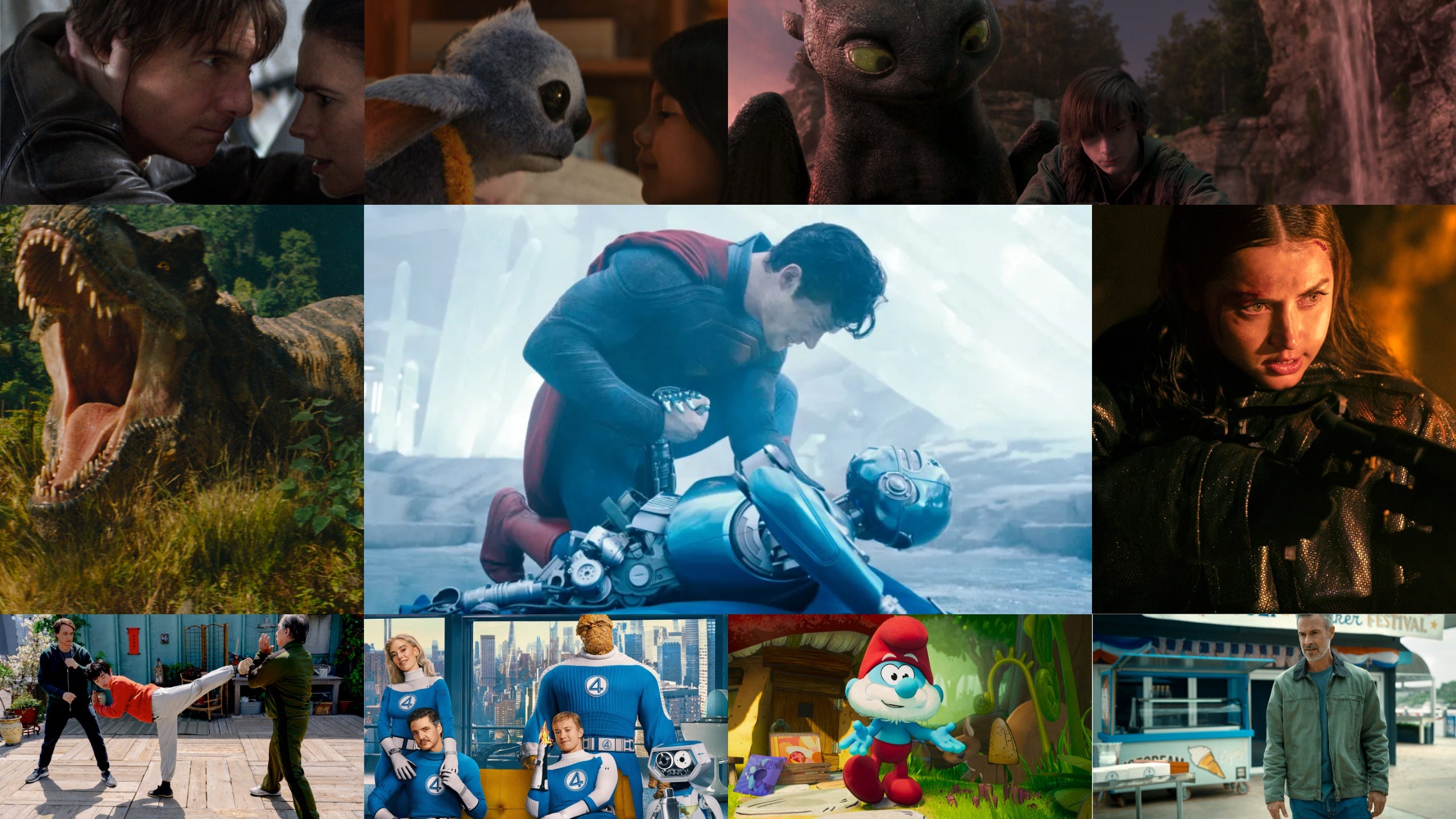
Happy 2026! With 2025 in the record books, it’s time to analyze what worked (and what didn’t) this past year at the box office. It’s been a year filled with wonderful moments and slumps, and the box office will wrap up with around $9 billion domestically, which is ever-so-slightly higher than 2024’s $8.75 billion. Anyway, here we go:

Big Winner: Holy S***, Anime Rules, Thanks to Ne Zha 2, Breaking all the Records!
Anime gets the gold star and then some for this year. And thanks to Ne Zha 2‘s dazzling animation and spectacle, it surely broke even more inconceivable records in this year alone:
- Highest-grossing non-English film
- Enlight Pictures now holds the record with Ne Zha 2 being the highest earning animated film, surpassing Inside Out 2 and Zootopia 2
- First non-English film to pass $1 billion and $2 billion benchmarks
- Became the highest-grossing film ever in a single market ($2.17 billion), dispatching of Star Wars: The Force Awakens
- First animated film to pass $2 billion globally, and second-fastest in history to do so behind Avengers: Endgame
- 5th-highest-earning film in box office history (only behind Titanic, Avatar: The Way of Water, Avengers: Endgame, and Avatar)
- Highest-grossing film of 2025
- Previous holder of the best worldwide debut for an animated film (until Zootopia 2)
You couldn’t ask for a better turnout, and even some other anime titles, such as Chainsaw Man: The Movie ($175 million) and Demon Slayer: Infinity Castle ($780 million worldwide, the highest-grossing Japanese film ever), earned their flowers by holding down the box office in languid times. Anime still has a place in the theatrical industry, and thanks to a turbo charge by Ne Zha 2, all is fine in the world.

Big Loser: No Thank You to Netflix Buying Warner Brothers Amid Their Hot 2025; Is it A Hint of the Death of Cinema?
Ok, not everything is fine in the world. We touched on this topic in great detail once the news shocked the theatrical ecosystem in December, so we’ll keep it compendious.
As it stands, this is not a good pill to swallow. Netflix conquering another studio titan, one known for pushing new bold ideas out as of late to serve the markets in a post-COVID world, is about as much of a middle finger as it gets to continuing the trend of burying theatrical releases for movies (and simultaneously handicapping their windows for making gross profit). Knives Out was an ill-fated victim, as the subsequent episodes turned up on Netflix’s porch to pull viewers in, the same with the likes of Happy Gilmore 2, Red Notice, and Back in Action. And yes, the Netflix shows/exclusive films can take a more absorbed hit than the likes of those drummed up in theaters (the world was dumbfounded when M3GAN 2.0 collapsed, but The Electric State didn’t hit any curb appeal).
But the practicality is that Netflix is insinuating the sentiment that “movie theaters aren’t worth your time anymore, damn it! Get home and enjoy our content for generations to come!” But you have originals in 2025, debunking the conventional wisdom about what is possible at the cinema. Originals are pulling mightily happy grosses for content folks will turn out for, or new conversions to IP that bring about the next Harry Potter, Hunger Games, Twilight sort of thing (which we’ll discuss further below).
It’s not a matter of containment, which may be seen as an ephemeral radical moment to showcase corporations winning again; it’s the proverbial writing on the wall that shows theaters might start fading into obscurity at some point. Will it matter to Netflix in due time? We can only speculate, but this is a lose-lose for everyone, including WB, who had one of their best years.

Winner: Zootopia 2 and Lilo & Stitch Roar with Success for Disney to return to pre-COVID Numbers
Disney can still make a spectacle, even if it’s still a far cry from its best years. It took a sequel and a remake to make the difference (and a return to Pandora, which we’ll check in on later).
Lilo & Stitch drummed up the works in the earlier part of the year, after the dismal performance of Snow White, and had the best opening weekend for a live-action animated film, beating out Detective Pikachu. Perhaps it’s because kids and adults wanted this as it carried the popularity and nostalgia of the Katzenberg-era or Walking Sleeping Beauty toons. Maybe they were adoring the new rendition of Stitch. In any case, it became the highest-grossing live-action animated film, grossing $1.038 billion, which is not too far off from 2019’s Aladdin ($1.05 billion) and 2017’s Beauty and the Beast ($1.26 billion)—great news for a live-action remake that folks wanted.
But then, Zootopia 2 came during the winter holidays and ramped up the bargain even further. Thanks to a tantalizing performance from China, the sequel surpassed $1 billion in 17 days and will wrap up its run over $1.5 billion. It had the fourth-highest worldwide opening for a film, broke Ne Zha 2‘s record for the best animated debut, and surpassed Frozen 2 to become Disney Animation Studios’ highest-grossing film. Disney wins when it ignores methodical expectations and breaks the rules.
Can they do the same in 2026? Because the likes of Avengers: Doomsday and Toy Story 5 can do just that.

Winner: Even With the Lost Luster, Jurassic World Rebirth Can Still Deliver the Dinos
Even when each passing title loses more luster and sensation than the next (except for Jurassic World in 2015), the dinosaurs still run rampant on the backbone of the Spielberg days and keep their roars intact. Rebirth grossed over $300 million worldwide in its debut and performed domestically on par with its predecessors. Mixed reviews couldn’t stunt its projections, and folks still tuned up before running off for the next title.
It jumps into the live-action, non-superhero, tentpole-sized spectacle that the families can band together and watch. Only this time, it fielded a different crop of talent with Scarlett Johansson, Mahershala Ali, and Jonathan Bailey. Johansson and Ali added star value to the product (in place of Chris Pratt), so their participation didn’t necessarily harm it. An $870 million worldwide performance means the dinos can continue for another day.
Now, we shall speculate whether going any further will cause burnout, because although the series has been one of Hollywood’s renowned performers, the risk of burnout is high if the next chapter in the IP continues to yield negative responses. Be careful what you wish for, Universal.

Loser: Folks, Not Every IP or Past Bit of Hollywood Needs to Get Revived
Ah, so this is where it comes to fruition that not every single IP needs a “rebirth” of their own, and more so, a poor bungle of shareholders thinking “audiences liked it years ago, so they’ll surely turn up again.” Not so fast. Hollywood has this horrendous mindset that all successful brands were “so popular,” and they end up not fully understanding the specific circumstances behind their success.
Tron: Ares was the most frustrating flop of them all. The Tron IP is not a mainstream franchise, with the first film barely cracking $50 million globally and the follow-up reaching $400 million in 2010. Lionizing the 1982 original and having nothing else to show for it, plus the public knowledge that Jared Leto is not a draw (“Morbin time” means nothing in today’s day and age, and is only more than a meme if anything), and Disney’s desperation to revive past glory, all but ensured the third chapter of Tron would flop. Not all IP is valuable, and just because someone on Twitter/X says they want it doesn’t mean the world does.
Predator: Badlands fell into the “fans loved it, few others cared” trap, synonymous with Power Rangers, Dungeons & Dragons: Honor Among Thieves, and Transformers One. And The Running Man, even with the infusion of Edgar Wright, was never going to bang much for its buck as Glen Powell is no “Tom Cruise.” Funny how these two titles stand ironically connected: Arnold Schwarzenegger led the titles in a one-and-done fashion in 1987; the alleged popularity of the late-1980s high-concept “Arnold fights for his life amid extraordinary, fantastical circumstances” didn’t resonate much this time around. Does that mean Red Heat and Twins will be remade and released in the same year?
As we preach, don’t keep going back to the past if we’re in the now, and the now will tell us about the future.

Winner: A Minecraft Movie Joins Sonic In Becoming Another Noteworthy Gaming IP Adaptation
All right, you can go back to the past if it’s still relevant in the now. And the Jack Black/Jason Momoa-led film based on the popular game series (yes, one for kids too!) rocked with $958 million and chicken jockeying alike. Minecraft is among the most popular video games in the world, and it launched only a little over 14 years ago (2011). Many Minecraft fans are still in the now time, instead of being dragged to watch Indiana Jones and the Dial of Destiny.
But it works because it encapsulates a game series that folks and their kids can easily enjoy together in the theater, and it has noticeable star power with Jack Black (mainly as Po the Panda/Dragon Warrior) and Jason Momoa (coming off the heels of Aquaman and its sequel). Both paired together made for a neat water-and-oil combination in a fun ride full of Easter Eggs and many of the tropes of the coveted game, even if deemed a lesser version of Jumanji. Much like Sonic, it’s an inoffensive, family-friendly, PLF-worthy theatrical outing (ok, maybe a little less on the inoffensive, as the Internet pundits went bats*** crazy over the chicken jockey scene).
Consequently, the memorable “video game curse” has also become obsolete since Rampage, when Sonic the Hedgehog and A Minecraft Movie won kids’ hearts and brought families together. Hollywood should be learning the lesson that to drive folks into your big blockbuster products, make them based on current source material, not from before the 2000s, in the hopes of wrapping heads around generational nostalgia.
All Hollywood needed this time around was a Steve.

Winner: We Want Originals, and More of Them; Pretty Please?
Yes, yes, yes! Original, non-IP-attached projects can summon the folks to the theater if you roll the dice on A) a simple premise, B) a memorable name leading the cast or directing the film, C) delivering a worthwhile product, and D) something folks are curious to tune in and see, as it’s a promise of cinematic escapism.
The likes of Sinners, Weapons, F1: The Movie, and even David offered up simplicity with respected names in the industry and powered through to etch their name in a year where several much-maligned blockbusters could not fit the bill. Coogler’s masterpiece nabbed the biggest opening for an original since Jordan Peele’s Us and went on to gross $368 million globally. Weapons became a sleeper hit thanks to an intriguing setpiece layout and went on to earn $269 million worldwide. F1: The Movie banked on Brad Pitt’s star power and became the highest-earning live-action original since Interstellar. And Angel Studios’ David cracked other IPs during the holiday festivities by earning $22 million domestic in its debut, the highest for an animated biblical film.
Great news all around that originals found a home to stick around and kick butt. Can we repeat such success in 2026?

Loser: Stop Remaking Beloved Toons, Disney, for ****’s Sakes!
(Slamming head against the wall repeatedly, angsting for the next inevitable remake.)
The short story is that no one cared about another remake, especially Snow White. Long story, there are too many intricacies to spell out about why this was always going to be a bust. Snow White was already looking into uncharted territories with a $250 million budget and “only” a $87.3 million worldwide debut. But the legs were not going to pan out from there enough to save the casualty.
It’s also subjective to discuss whether Gal Gadot and Rachel Zegler’s squabbles on set had an impact on the film (it didn’t) or whether the lambastful comments hurt regarding Peter Dinklage taking umbrage with the film’s existence and CGI for the dwarves (it didn’t). Now, Zegler’s anti-MAGA remarks and comments on race relations with the 1937 original probably didn’t help matters, especially coming off the heels of the 2024 presidential election. The point in case answer is Snow White was “just” another remake; Gadot and Zegler are not draws, nor did mixed reviews salvage much faith in the film’s performance. (Funny how everyone online was mocking Gal Gadot’s chops, which probably could’ve summoned some ROI on its own merit.)
Another point of contention: Why watch this remake when you could watch a semi-recent live-action redo a la Snow White: A Tale of Terror, Snow White and the Huntsman (opened with $55 million back in 2012), Mirror Mirror, and ABC’s series Once Upon a Time? Why watch this remake when you could witness the Cinderella remake or a recent toon like Tangled? Yeah, The Little Mermaid might’ve done well enough in the U.S. in 2023, but it bombed overseas.
Folks turned up for Beauty and the Beast thanks to Emma Watson’s added-value element and Aladdin with Will Smith playing the Genie. No such crutch was going to exist here for Snow White. Therefore, shareholders demanded this remake, and not audiences. The movie opened lower than Dumbo in 2019, if you’re accounting for inflation. And Disney is going to have to try to learn how to save face elsewhere. Wait a minute…

Loser: Elio Should’ve Meant Something More for Pixar, Not Another Indictment That Disney+ Killed The Once Beloved Brand
Double swing and a miss indeed. We’ve already torn into the incessant remakes, and now we have to discuss yet again a company dismantling one of its bright stars. Elio landed with a $35 million global thud of a start back in the summer, and most pundits will caterwaul that marketing is what killed the latest Pixar bust. But as we’ve preached since 2020, Disney+ maimed Pixar (and even Marvel) in driving consumers to non-sequel theatrical experiences.
The hook wasn’t the issue: “boy gets abducted by extra-terrestrials and mistaken as a leader, but must ensure the planet’s continued survival.” It’s not as if Up needed to preach to a grieving widower, or WALL-E‘s commentary on humanity forgetting to exist; folks tuned in because they adored Pixar. It’s the same reason why Incredibles 2 can skyrocket past $1 billion, and why folks would still come back for Woody and friends in Toy Story 4 (even though that’s a whole other subject about milking a cow past a story that didn’t need it).
Disney and Bob Chapek decided after COVID to toss films straight to streaming. It hurt Soul, Luca, Encanto, and Raya and the Last Dragon tremendously, much as it got accentuated when the theatrically released Lightyear bombed. It taught audiences that Pixar originals didn’t matter much to us any further, and we could wait to binge them at our homesteads when you had Sing 2 and Sonic the Hedgehog 2 legging out to $400 million and beyond as theaters were warming back up in late 2021/early 2022. It appears now that, to play it safe since Coco is the last Pixar original to pass $500 million, Pixar has to cough up sequels for folks to fork over dollars (i.e., Inside Out 2, and then Toy Story 5, Incredibles 3, and, what’s this, Coco 2).
Elio had the potential to deliver the goods during the summer; instead, folks were more interested in remakes of How to Train Your Dragon or Lilo & Stitch. Not super indeed, and not anything encouraging for the upcoming Hoppers and Gatto toons. Sometimes, pushing through the bad times isn’t such a bad thing.

Winner: James Gunn Can Succeed With Superman and Whatever Comes Next for DC, if Done Correctly
James Gunn has proven time and again that he knows how to handle superhero lore, whether it’s the Guardians of the Galaxy trilogy or the Suicide Squad reboot that had folks wondering why that couldn’t have been the quirk that allowed DC to shine back when the DCEU was just getting started. Keep in mind that for every The Suicide Squad, Wonder Woman, and Shazam!, the DCEU imploded with Suicide Squad, Justice League, and Black Adam. Now, with Gunn and Peter Safran leading the charge for the new DC Universe, it appears they can do some goodwill, and Superman did good work to warrant a fresh start.
Good reviews and a heartfelt direction led the way, with David Corenswet handling the mantle very well, and Nicholas Hoult providing a worthwhile performance as Lex Luthor. $616.8 million later, and it’s already kickstarting the factory for a sequel, spin-offs, and other characters to join the universe. Plus, the various television series have already received formidable positive feedback, and it’s only a matter of time before DC can start challenging Marvel for superhero-led dominance. A common question is, was Marvel in the wrong for losing James Gunn to DC? Should they have suspended him instead of firing him back during the whole “unveiling of aged horribly jokes from James Gunn,” yet when he was poised to lead the Cosmic Universe for Marvel?
Only time will tell, starting with Supergirl in the summer. And speaking of Marvel…

Mixed Bag: Marvel Studios’s Conceded to (Some) Failure with the New Stuff, and Simply Is Waiting for Nostalgia a la Spider-Man and Avengers to Win Folks Back
So, in a short version, Marvel Studios was trying to rehabilitate itself this past year with three titles (admittedly, Thunderbolts* and The Fantastic Four: First Steps were pretty good; Captain America 4 was a poor derivative take on its star-spangled predecessors and a subtle nod to why it should’ve been “Incredible Hulk 2”), even if the totals were almost a far cry from the old days (a combined $1.318 billion with three titles is appalling compared to 2015-2019 MCU standards). The extended version is a bit more complicated to discuss.
Folks, it’s not difficult to state that Disney and Marvel Studios want to aggrandize their next significant chapter with “Earth’s Mightiest Heroes,” especially with a meticulous approach to ensure the audiences and numbers work when the time comes. But at its essence, Marvel is going back to the coveted nostalgia, including Tom Holland’s Spider-Man and the Infinity trio of Robert Downey Jr., Chris Evans, and Chris Hemsworth, to sell its next batch of big titles in 2026. That’s an obdurate admission that Marvel didn’t have trust in their “new” characters and tales in the Phase Four/Five selections, and now have to gun it for all hands on deck for Spider-Man: Brand New Day and Avengers: Doomsday.
If you want to be pedantic, let’s consider. The only sub-franchises in the post-Endgame saga to stand on their own without the incessant tie-ins (or need to pull in other branches of the MCU) were Doctor Strange in the Multiverse of Madness, Guardians of the Galaxy Vol. 3, and Black Panther: Wakanda Forever. Spider-Man: No Way Home and Deadpool & Wolverine coasted on past-tense nostalgia for episodes that had less to do with the MCU and more to do with a generation ago (while pulling in $1 billion-plus totals). Meanwhile, the attempts at mythology episodes/new characters since Endgame with Eternals ($402 million), Ant-Man and the Wasp: Quantumania ($476 million), The Marvels ($206 million), Captain America: Brave New World ($414 million), and Thunderbolts* ($382 million) earned, checks math, less combined than Spider-Man: No Way Home ($1.921 billion). Ditto to Shang-Chi and the Legend of the Ten Rings for standing on its own prowess during uncertain times, even though Marvel hasn’t done a single thing with the character since then (outside of Simu Liu’s complaints online to venerate further interest in his character’s standing).
Going back to the numbers: Yes, COVID, suffocating writers’ strikes, the unfortunate passing of Chadwick Boseman, and the legal issues/termination surrounding Jonathan Majors occurred; however, Disney took the wrong turn by cramming one too many bits of content on Disney+, devaluing the S-tier value of the brand, and making every MCU project from 2020 onward become another homework assignment (or lethargic setpiece to sit through). To quote a purple titan, “You could not live with your own failure. Where did that bring you? Back to me.” And in this sentiment, back to Thor, Captain America, and kind-of-sort-of Iron Man we go. Even Spider-Man faces the brunt of it, as the three chapters involved in the MCU’s timeline showcased how much he means, and Marvel seems to be testing folks’ nerves with whatever awaits the solo web-slinger heading into his fourth chapter.
Was the product better this past year? For the most part, yes; dare we say “almost” a return to form. But the numbers don’t lie: Marvel is trapped in its own days of future past (see what yours truly did there?), and it’s predicated on nostalgia to sell Doomsday and more Spider-Man for 2026 to divide and conquer once more (even if they have collectively passed $32 billion with all the films under their belt). Just inevitable, not impossible.

Loser: Tom Cruise’s Last Ride with the Impossible Was Not Enough to Save Paramount This Year
It hurts to write about because you’d think that Tom Cruise’s last ride with Ethan Hunt to do the impossible would spur a stronger knee-jerk reaction from more folks to get their ventilators ready for another heart-attacking, adrenaline-inducing rush. But, with only a $64 million weekend (not including Memorial Day), Final Reckoning opened on par with its predecessors since 2006. To be fair, Mission: Impossible III would “disappoint” with a $48 million debut, but Ghost Protocol rectified it with $77 million in 2011. Rogue Nation might still stand as probably the best of the series, but I digress.
The most significant detriment to Final Reckoning and its predecessor was the balloon-sized budgets, thanks to working conditions during COVID and labor strikes. Yes, unprecedented conditions cannot become entirely controlled by production in today’s landscape. Still, a $400 million budget for Ethan Hunt’s sendoff is a major pill to swallow (for only $599 million worldwide), especially given the lack of attention it received and the lack of a bailout from other major overseas territories. The timing aspect also hurt its ability to perform when it mattered most, as getting sandwiched by Lilo & Stitch, Karate Kid: Legends, and Ballerina didn’t help its legs. Paramount didn’t have many other major titles to generate a box-office storm in 2025, as it contended with government regulators over the sale to Skydance and a new management team. Consequently, they were the weakest performers among the major studios this year, and the hope is that things will turn around imminently. But in the sendoff for Ethan Hunt, this leaves them in a dire situation to step up for 2026, because the impossible this time around wasn’t fascinating enough.
Here’s to Scream 7 and Scary Movie 6. Not sure if the same could become said for The Angry Birds Movie 3. Or if the reboot of Mission: Impossible comes someday, I don’t know.

Winner: Universal’s How to Train Your Dragon Is a Simple Re-Adaptation Done Right
Perhaps the gratuitous sense prevented this writer from seeing yet another remake (clears throat). However, Dreamworks can still tune up the band with their dazzling collection of works, and no better way than to reunite Hiccup and Toothless in a live-action presentation. The 2010s were the story of the titular pair navigating how to coalesce in a world that was against dragons, then willing to work with dragons, and then letting them go free. The trilogy was a barn-burner bit of business and storytelling, and thus, if the live-action can respect the animated source material, it’ll be a home run on all fronts. They even had Gerard Butler reprise his role, and the fantasy elements subtly remind us of a Game of Thrones-esque environment (a PG one, no need to be carnal here).
Much like we preached with A Minecraft Movie, kids will show up because some of them grew up with dragons and Vikings over the past decade.
Fun fact: it is the second-highest earning live-action animated film behind Lilo & Stitch, and the franchise in total would surpass $2 billion thanks to the lovable Toothless and “stoic” Hiccup. You couldn’t ask for much more, except knowing the sequel will arrive in 2027.

Loser: Dang it, Blumhouse, M3GAN 2.0 didn’t Please Audiences with the New Tone and Direction
Ouch, this was supposed to be a safe sequel, guys.
Well, as the premise shifted from “artificial intelligence robot turns meta and evil” to “said artificial intelligence robot is now the savior of the human race!”, you couldn’t pull any more of a Terminator 2: Judgement Day than that. M3GAN 2.0 was already in a poor position when compared to a gregarious few recent busts like The Woman in the Yard, Drop, and The Wolf Man from the Blumhouse banner. When it debuted with $10.3 million, below the opening of Speak No Evil, that’s an indictment of Blumhouse as the reliable place to stash high-quality popcorn-fun horror films. And even for a sequel to earn less than its predecessor, which may have enraptured folks thanks to another A.I. doll breaking the internet, in a day and age of franchise-focused pieces, M3GAN experienced the worst of the bunch.
Jason Blum and Co. have been learning the wrong lessons from the 2018 revival of Halloween and might soon with Five Nights at Freddy’s (well, somewhat), but M3GAN has sputtered to an abysmal end because no one asked for a drastic change-up. In the words of Arnold, “Hasta la vista, baby.”

Winner: Avatar: Fire and Ash May Not Explode in Debut, but Holiday Legs Will Have It Break Records
James Cameron’s threequel has been under the scope in a rather intriguing way. Yet, it’s performing with an inveterate goal in mind: leg out massively over the holidays like its predecessors.
Yes, it debuted domestically lower than The Way of Water, but the 2022 film opened in a dead market and faced a handful of movies that earned merely $1 million. The competition might be more abundant this holiday season (which is terrific!), but it’s still going to get the job done. A $347 million worldwide debut ($89.2 million in the United States and Canada) isn’t anything to write home about. Still, audiences are taking their time to revisit the world of Pandora. The Way of Water “only” opened with $441 million worldwide ($134 million debut domestically), but that legged out in a “holy sh**” fashion to $685 million domestic and $2.2 billion globally. Fire and Ash isn’t precisely a must-watch synonymous with the likes of recent Star Wars chapters or Spider-Man: No Way Home that opened in the December season, but it ain’t flatlining anytime soon.
It’s probably going to be around (or past) $1 billion once this article gets distributed, and even if it doesn’t leg out to $2 billion, there’s no need for James Cameron to heed online skepticism that folks are walking away from the incoming fourth and fifth chapters. Avatar is a cinematic experience, much like the Avengers IP, that is going to stick around for years to come (as long as no nonsensical story takes folks out of the action; what the hell is wrong with you, The Rise of Skywalker?). It may not smash upfront, but it will go the distance.

Loser: Dwayne Johnson’s Run for The Oscars Comes with a “Smashing” Realization
Well, Dwayne Johnson got his wish to play Mark Kerr onscreen in a gritty tale of the MMA fighter’s early days; the problem is, it didn’t smash anything of importance, only pointed out the flaws of the film, and accentuated the fact that no one is turning up to smell what the Rock is cooking anymore.
The Smashing Machine is a bizarre stitching of several “for your consideration” clips, rather than a straightforward narrative, and Johnson does try much more than in recent affairs to make something of it. Still, the prosthetics seem to wear him down more than anything this time around. And as this writer has pointed out multiple times in the past few years, unless Johnson remains tethered to a strong and noteworthy IP, he’s not exactly endearing folks to come and sustainably watch his films. Black Adam was poised to alter the DCEU’s dynamic, but flopped because it never delivered, even as an origin story. And Red One was a boring Christmas adventure, only serving to pad paychecks. So, for this film to gross even less than the recent acclaimed The Iron Claw (which was deemed even more commercially depressing), it’s ironic that this result becomes based on a fighter coming to terms with his periodic defeat.
One could argue that Johnson spurred a B-level hit, Jumanji, into an A-level value hit for a few years before it wraps up. But it seems evident in the headlines as of late that he does more harm to an IP than he does to help it. Think the Fast & Furious Saga civil war feud with Vin Diesel over how to proceed with the franchise spinning its wheels since the late Paul Walker, the failed takeover in the DC Universe that orchestrated an immediate reboot, an irking return to WWE in 2025 and then no show for a hefty development because “my work remains done here”, and the various other big-budget titles on Netflix and Amazon that constituted as big-budget failures. The other (subtle) aspect that has been working against him is comparisons of his performance as a Hollywood attraction to WWE brothers like Dave Bautista and John Cena, who have learned to flesh out more than just their muscles (and comedy chops) onscreen.
Johnson’s days as the “bigger than the IP” theatrical branding are definitively over, and no amount of Maui, now and upcoming, is going to alter that projection anytime soon. The 2020s are not the 2010s (and vice versa), guys. Coasting on a name isn’t quite the rep it used to be, as we’ll discuss further below with another actor who also drew massively in a previous generation.

Winner: Is Comedy Making a Comeback?
Holy smokes! Doth thy eyes need to be cleaned?
Somehow, the “just a comedy” trip has seen its reputation blossom a bit this year. Kudos to Freakier Friday for opening with $29 million, the largest debut for a single comedy feature since Girls Trip‘s $31 million in July 2017. The reboot of The Naked Gun film saw Liam Neeson encapsulate a hilariously over-the-top role as Frank Drebin’s son, and it grossed over $100 million worldwide. The alacrity of studios to dig deep into their bags of IPs to resurrect a genre that had become practically obsolete, as every other genre was blending in some fashion of laughs, was an excellent bit of business. Positive reviews and good turnouts showed that audiences can be lured back into the “solely a comedy” realm now and then, and they can still over-perform with their demographics even when competing with the other box-office leaders.
Heck, even Materialists, starring Chris Evans/Pedro Pascal/Dakota Johnson, sold itself as a romantic comedy and the dangers of commodification, whilst earning $108 million on a $20 million budget. Yes, Chris Evans isn’t necessarily a butts-in-seats draw (unless he’s the star and spangled hero), and Pascal hasn’t quite captured the essence of becoming Hollywood’s new big thing. Still, the genre prevailed, and the numbers showcased a comeback overall for “here as a comedy, nothing more than a comedy.” Great stuff!

Winner: Horror Still Does Great Business; Check Your Heart Rates!
As per usual, the screams and the jolts mesmerize audiences into coming to the multiplex. Take that, PVOD!
Take, for example, The Conjuring: Last Rites, which opened worldwide to $194 million, surpassing It ($190 million in 2017) and becoming the biggest horror debut. The Conjuring series has thrived in times of growth and famine, through the good and bad selections. Folks tuned up to see Patrick Wilson and Vera Farmiga’s winning chemistry as the righteous, empathetic incarnations of the Warrens that documented the supernatural for many years. James Wan and Warner Bros. have succeeded with the Conjuring universe because it’s a low-budget, horror income stream predicated on past tales and religiously specific fright fests. With slightly under $500 million, Last Rites proved to be a worthwhile sendoff for the duo; now, does that mean the characters get (subconsciously) rebooted, since this universe is still going mightily strong?
But it gets better for horror this year. As we discussed above, the original, non-IP, simple concept of Weapons won over audiences, earning $269 million. 28 Years Later returned with $151 million. I Know What You Did Last Summer grossed $64.8 million, serving as a spiritual sequel to the 1997 and 1998 films. Final Destination Bloodlines roared with $315.8 million, becoming the highest-earning installment of the series (hey, if Scream can do it too, so can we!). Five Nights at Freddy’s 2 might have received poor marks from critics, but audiences enjoyed it as much as the namesake game, and it has passed $225 million worldwide. And The Grabber brought folks back for a neat sequel, Black Phone 2, which grossed $132 million. Oh, and Sinners snagged records for an original, too.
What has served horror well is low-budget titles that rely on strong word of mouth to draw folks in and enjoy the fiendish scares. And if a success, sequels that dawn are generally a safe way to keep folks tuning in (definitely not M3GAN 2.0) for more scares and hair-raising chills up their arms.

Loser: Like Dwayne Johnson, Leonardo DiCaprio Is No Longer A Reliable Draw, As in the Previous Decade
Well, they can’t all be wins. The Leonardo DiCaprio-led One Battle After Another netted only $22.4 million in its opening weekend, which is DiCaprio’s lowest-earning debut since J. Edgar. The film sputtered to a box-office loss, despite being highly acclaimed and directed by Paul Thomas Anderson, earning only $205 million globally.
Yes, it’ll be a major contender for the Oscars season, but it’s a stark reminder that DiCaprio no longer has the pull anymore. In the 2010s, his biggies opened closer to $40 million instead of $20 million. And sure, a lot of films under his banner are R-rated, skewed toward select adult demographics, which have given the actor ample opportunity to showcase his prowess and to turn a profit. You’d even think in a year where Warner Bros. is kicking butt with originals, part ones of IP, and well-liked horror follow-ups in reliable horror franchises that another original wouldn’t hurt to perform as well. But it lost over $100 million during its theatrical run and is more of “one for the team.”
DiCaprio may have had the juice, especially with films like Shutter Island, Inception, Django Unchained, The Wolf of Wall Street, The Revenant, and Once Upon a Time in Hollywood in the 2010s. However, in the 2020s, with this title and Killers of the Flower Moon, there is no longer that same fate. The kings have gotten axed.

Winner: Jonathan Bailey is the Box Office King For The Year
This entry is a small note, but Jonathan Bailey gets the nod for the “box office king” title for the year. Being a part of Jurassic World Rebirth ($869 million worldwide) and Wicked: For Good ($510 million and counting) gives him the title for the year.
Mr. Bailey continues to climb the mountaintop after recent performances in Bridgerton, Fellow Travelers, and Wicked last year, and after being named “Sexiest Man Alive” for the year. You can’t ask for much more when strong performances and enrollments in big projects net excellent results.

Big Winner: Despite the Tumultuous News, Warner Bros. Won the Major Studio of the Year Award
Well, this entire article may stand saturated with discussions about Warner Bros. dominating the year. Still, credit has to go where it’s due, even if the fear of it becoming absorbed by a PVOD titan is equally mind-boggling as it is asinine.
But it’s a comeback of the year; after a roughshod performance of Joker: Folie a Deux in late 2024 and the low bars set by Mickey 17 ($$133 million on a $118 million budget) and The Alto Knights ($10 million on a $50 million budget), the studio rebounded by relying on old-school tricks ranging from IP to bold directors to fresh concepts. Hell, they’re firing on all cylinders, and it’s allowed them to get seven consecutive $40 million-plus weekends this year alone for their batch of titles, a record in Hollywood’s long history.
Sinners, Weapons, F1: The Movie, Superman, A Minecraft Movie, and Final Destination: Bloodlines all did their parts to separate WB from the pack this year, unequivocally. Even with the underwhelming performance from One Battle After Another, WB was still riding high and legging out when it mattered the most in all parts of the year. If this is their last year as a standalone distribution studio, they did go out with a bang.

Mixed Bag: But…With The News About WB, What Does 2026 Hold for the Theaters?
To wrap things up, it’s uncertain how the movies will progress if a titan is indeed becoming shelved, or dare we say demoted, when it comes to the blockbuster releases that pull families and friends out to the theaters. Netflix’s business mindset (or metier) of existing “everything, everywhere, all at once” for professionally filmed entertainment is simply going to undercut theatrical releases, and that means the other studios have to pick up the scraps to dominate (to be fair, WWE hasn’t been a theatrical experience, but the commercialization is very prevalent; more ads to replace the wrestling aspect is perturbing enough!).
2026 has a lot in store to keep audiences heavily invested in what comes next from the other major studios: 28 Years Later: The Bone Temple, Wuthering Heights, Scream 7, The Drama, The Devil Wears Prada 2, Mandalorian & Grogu, Toy Story 5, Supergirl, Moana (2026), Christopher Nolan’s The Odyssey, Spider-Man: Brand New Day, Coyote vs. Acme, Clayface, Resident Evil, The Hunger Games: Sunrise on the Reaping, Meet the Parents 4: Focker In-Law, Narnia, Jumanji 4, Dune: Part Three, and Avengers: Doomsday. Expect Disney and the lingering big projects of Warner Bros. to lead the way.
If the interest is swell and the product inspires, we will see a great year for the cinema. If busts are awaiting to be saved by the gargantuan projects, it’ll be a tough sight to behold for the future. Let’s see how 2026 performs.


