

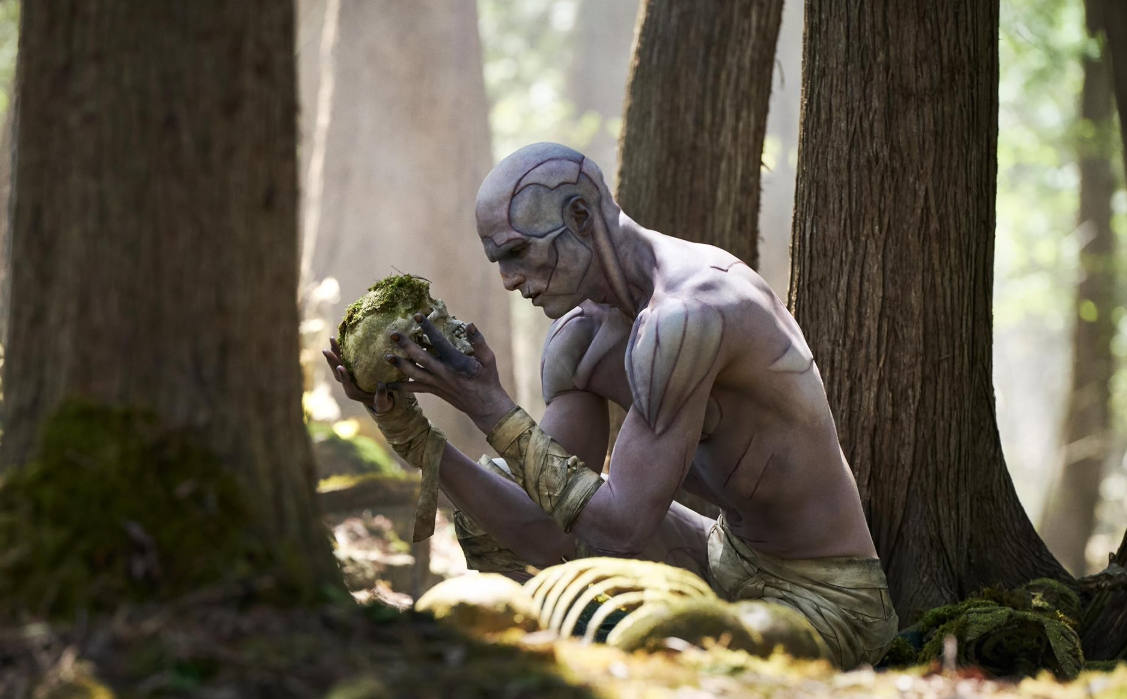
“I fear you, Victor. I always have. Every ounce of madness and destruction. The very conflagration that devoured everything. It all came from you. You are the monster.” -William Frankenstein.
We have seen many tellings of the classic story of Frankenstein. From the black and white beauty of the 1931 Frankenstein or the poor, chaotic disaster that was 2004 Van Helsing. Each director and screenwriter builds their own telling. Del Toro (Pan’s Labyrinth and The Shape of Water) breathes life from the opening credits. His writing builds upon a new story of an old tale. Accompanied by the outstanding acting of Jacob Elordi (Euphoria) and Oscar Issac (Dune), we witness a true masterpiece that should have Oscar nominations coming this season.
Frankenstein begins with a prelude, for those who know; theater follows a three-act system. The prelude brings us to the current time in the story. With an injured Victor Frankenstein (Oscar Issac) being saved by Dannish sailors. He then tells the story of his life, Act two. Starting at his childhood, flowing through the building of his experiment, to his regret of playing God. We are then shown the story of his creation, or what humanity often calls…his monster, Act three. The beast (Jacob Elordi), after scaring all the sailors, happens across the captain’s quarters. Only to tell his story of what happened after Victor decided to continue to play the game of life and death. He brings us on a path of what it means to be alive, to be human. Filled with sorrow and loneliness, he seeks his creator to help him. After a confrontation, we then align to the current time of the story, the prelude. With an ending that can be seen as questionable, but the best works always make you work your mind.
All critics have scenes that upset or seem insincere to the story. Even the best directors and screenwriters create scenes; we believe unnecessary, but Del Toro’s astonishing work limits these to only a few. The story of Elizabeth (Mia Goth) seems underwhelming at times even with splendid acting. A role many should see as important. Because Victor may be the creator, but who will be the mother of this monster? All children need both figures to help them grow to their brightest potential, even if this child is a monster. An ending that seems abrupt with a wonder of what this strong story could have built on the character’s growth.
Though a simple few outliers to a bigger masterpiece. From real set designs built by craftsmanship with limited focus on digital and simulations, it helps the viewer live amongst the screens. The emotion and madness of the characters make them seem familiar because we suffer and feel them in our own lives. We come to understand that the creator deals with unconquered trauma which leads to his horrific and fearful decisions. Along with the monster, we return to our own youths through strong nostalgia of what it was like to learn to speak and read. Even how we find ourselves in this murky world.
The beauty of Frankenstein is shared with the flaws of the characters and their livelihoods. Comparable to the great Greek tragedies of ancient times, this story brings our hearts and minds into atonement. Would we show such distaste for those we consider monsters? Should we not look kinder to what they can become rather than the classic, do not judge a book by its cover. This adaptation can be marked as the best since 1931, and the best concept of the monster and its maker, Victor Frankenstein.


