

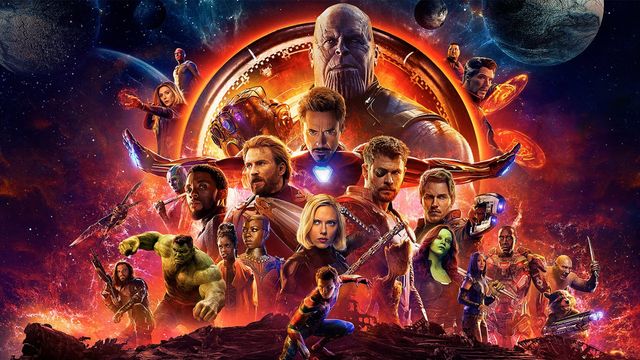
The 2000s perfected the superhero blockbuster. In 2002, Sam Raimi debuted his Spiderman trilogy, launching the public’s interest in seeing Marvel comics on-screen. Later, in 2008, Marvel’s popularity further exploded with Iron Man. This film was the debut of the Marvel Cinematic Universe, and it set a precedent for excellence within the franchise. Audiences fell in love with Robert Downey Jr., the mixture of humor and action found on-screen, and the teaser post-credits scene. In the following several years, the addition of other superheroes into Marvel’s world culminated in the long anticipated The Avengers. It was a cultural phenomenon, grossing one and a half billion dollars at the box office. Marvel was flexing its creative muscles by playing with characters and settings that audiences had grown comfortable with. Following installments of the Avengers movies would also cling to peoples’ familiarity of the superhero team. By using a world that was already established and understood, the movies were able to create layers of depth.
But what happens when audiences get tired of the familiar? There is no clear moment when audience interest started to dip, but the box office returns on Marvel movies have severely diminished. Even more indicative of this decline is the lack of popular interest. The opening days of new installments in the Marvel franchise used to be massive events. Fans would dress up for the premieres, buy their tickets weeks in advance, and buy tons of merchandise that tied in with the film. These movies were as profitable as they were popular.
Yet, in 2024, this trend has mostly died off. Few people, outside of the die-hard fans, have any idea when new Marvel movies will be released. Even worse, most people aren’t even aware what characters are featured in these films. Released in February of 2024, Madame Web broke the record for the lowest box office weekend, barely earning a pathetic fifteen million dollars. This failure seems a long way from The Avengers, but there is only a twelve-year difference between the two.
Many have theorized that the success of Marvel movies was simply a trend. Perhaps that is the case, seeing as they helped define the genre at a time when it desperately needed an overhaul. Superhero movies had previously been characterized by their dark themes, and Marvel Studios brilliantly injected humor into their stories. This led to the stories being well received by larger swaths of people, from children to young adults, to older audiences who may not have traditionally enjoyed comic book centered movies.
More likely is the theory of oversaturation. While trendiness certainly may have played a part in the initial success of the MCU, the brand endured for almost a decade. That track record of success defies the flighty attributes of trends, which come and go on a much quicker basis. Rather, the dip in box office success and public interest came as Marvel significantly increased their output. Between 2008 and 2016, Marvel released no more than two films per year. By 2017, this number would jump to three, and after 2020, the MCU was releasing at least four movies per year, as well as television shows. This overabundance of content made it impossible for the franchise to remain relevant. First, there was no anticipation leading up to a new movie’s release because the films were debuting much more frequently. Second, the amount of content people had to watch in order to keep up with the storylines of the cinematic universe was insurmountable.
When Iron Man first released, audiences were being pulled into a universe they had no context for. Four years later, The Avengers required people to have seen a handful of movies to piece together the plot of the film. Finally, at the release of 2019’s Avengers: Endgame, audiences were required to have seen Marvel’s previous twenty-one films. The MCU had been a massive success, and as a result, it ballooned into an institution that was unmanageable for people to keep up with.
Seeing Marvel characters onscreen is no longer the cultural capstone it was in the last decade. Audiences have been flooded with content and have responded by not showing up to the box office. The superhero blockbuster is on its deathbed. If Madame Web is indicative of the state of the MCU, the studio will have to drastically change their approach to storytelling in the coming years. This issue may be larger than just Marvel, though. Other franchises, including Indiana Jones and Star Wars, have suffered a similar fate. The overproduction of content has fatigued moviegoers, and their waning interest in these films can clearly be seen in the dismal box office returns.
In a cinema landscape full of franchises, the properties people once loved seems to no longer hold its weight.


